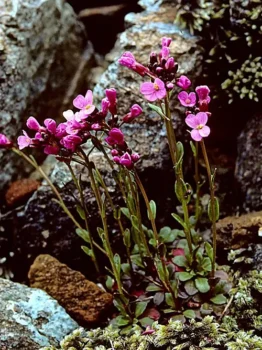
MacDonald Rockcress: A Rare Gem for the Specialized Native Garden
If you’re looking for a truly unique addition to your native plant collection, MacDonald rockcress (Arabis macdonaldiana) might catch your eye. But before you start planning where to plant it, there’s something important you need to know about this special little wildflower.
A Rare Beauty Worth Protecting
MacDonald rockcress isn’t your everyday garden plant – it’s actually listed as Endangered with a Global Conservation Status of S2, meaning it’s imperiled in the wild. With typically only 6 to 20 known occurrences and between 1,000 to 3,000 remaining individuals, this perennial forb is one of nature’s rare treasures that deserves our respect and protection.
If you’re passionate about growing this species, you absolutely can – but only with responsibly sourced material from reputable native plant nurseries that practice ethical propagation methods.
Where MacDonald Rockcress Calls Home
This native beauty is found exclusively in California and Oregon, where it has adapted to very specific growing conditions. As a true endemic species, it’s perfectly suited to the unique landscapes of the lower 48 States’ western regions.
- Species observed
- No observations
What Makes This Plant Special
MacDonald rockcress is a charming perennial forb that grows low to the ground in attractive rosettes. In spring, it produces clusters of small, delicate white flowers with four petals each – a classic characteristic of the mustard family. While it may not be the showiest plant in your garden, its subtle beauty and conservation significance make it truly special.
You might also see this plant referenced by its scientific synonyms, including Arabis blepharophylla var. macdonaldiana or Arabis serpentinicola, but they all refer to the same rare species.
Growing MacDonald Rockcress Successfully
This isn’t a plant for every garden, and that’s perfectly okay! MacDonald rockcress has very specific needs that reflect its natural habitat:
- Soil requirements: Excellent drainage is absolutely crucial – think rocky, gravelly, or serpentine soils
- Light conditions: Full sun to partial shade
- Climate zones: Hardy in USDA zones 8-10
- Water needs: Low water requirements; avoid overwatering at all costs
Perfect Garden Settings
MacDonald rockcress shines in specialized garden settings:
- Rock gardens with excellent drainage
- Native plant gardens focused on regional species
- Serpentine soil gardens (if you’re lucky enough to have this soil type)
- Conservation-focused landscapes
Supporting Pollinators and Wildlife
Despite its small size, MacDonald rockcress plays an important role in supporting native pollinators. Its delicate white flowers attract native bees and other small beneficial insects, contributing to the local ecosystem’s health.
Care Tips for Success
The key to growing MacDonald rockcress successfully is remembering that less is often more:
- Plant in a well-draining soil mix with plenty of gravel or sand
- Water sparingly – this plant prefers to stay on the dry side
- Avoid fertilizing, as it’s adapted to nutrient-poor soils
- Provide some protection from harsh afternoon sun in hotter climates
A Plant Worth Preserving
Growing MacDonald rockcress is more than just adding another plant to your collection – it’s participating in conservation. By choosing to grow this rare native with ethically sourced material, you’re helping preserve genetic diversity and supporting nurseries that practice responsible propagation.
Remember, this remarkable little plant has survived in specific habitats for thousands of years. By understanding and respecting its needs, you can successfully grow MacDonald rockcress while contributing to its long-term conservation.