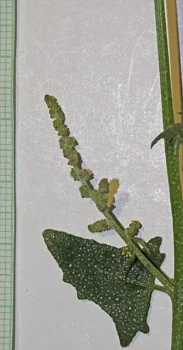
Mapleleaf Goosefoot: A Hardy Native Annual for Wild Gardens
If you’re looking for a low-maintenance native plant that practically grows itself, let me introduce you to mapleleaf goosefoot (Chenopodium simplex). This unassuming annual might not win any beauty contests, but it’s got character and some surprising benefits for the right garden situation.
What Exactly is Mapleleaf Goosefoot?
Mapleleaf goosefoot is an annual forb—basically a non-woody plant that completes its entire life cycle in one growing season. Don’t let the scientific name Chenopodium simplex intimidate you; this plant is anything but complicated to grow. It’s part of the goosefoot family, and as the common name suggests, its leaves have a distinctive triangular, maple-like shape that makes it easy to identify.
This native beauty can reach impressive heights of 3-6 feet, creating a substantial presence in the garden despite its humble appearance. The plant produces small, greenish flowers that won’t stop traffic but serve an important ecological purpose.
Where Does It Call Home?
Here’s where things get interesting—mapleleaf goosefoot has one of the most extensive native ranges you’ll find. This adaptable plant naturally occurs across most of North America, from Alberta and British Columbia down through the lower 48 states. You’ll find it growing wild from Alaska to Arkansas, from California to Nova Scotia, and just about everywhere in between.
- Species observed
- No observations
However, there’s an important caveat for gardeners in New Jersey: this species has a rarity status of S2 (Highlands Listed), meaning it’s considered uncommon in the state. If you’re gardening in New Jersey and want to grow this plant, please source seeds or plants from reputable native plant suppliers rather than wild-collecting.
Should You Grow Mapleleaf Goosefoot?
The honest answer is: it depends on what you’re after. This isn’t a plant for formal flower borders or manicured landscapes. Instead, mapleleaf goosefoot shines in:
- Wild or naturalized gardens
- Native plant restoration projects
- Edible landscapes (the young leaves are edible when cooked)
- Low-maintenance areas where you want native coverage
While it won’t attract crowds of butterflies like some native plants do (it’s wind-pollinated rather than insect-pollinated), it does provide habitat and food sources for various wildlife species.
Growing Conditions and Care
One of mapleleaf goosefoot’s best qualities is its easygoing nature. This plant is remarkably adaptable and can handle a wide range of growing conditions:
- Sunlight: Prefers full sun but tolerates partial shade
- Soil: Not picky—adapts to various soil types including poor soils
- Water: Drought tolerant once established
- USDA Zones: As an annual, it can be grown in zones 3-9
Planting and Care Tips
Growing mapleleaf goosefoot is refreshingly straightforward:
- Direct sow seeds in spring after the last frost
- Scatter seeds on prepared soil and lightly cover
- Water gently until germination occurs
- Once established, the plant requires minimal care
- Allow some plants to go to seed if you want it to return next year
Fair warning: this plant can self-seed enthusiastically, so be prepared for volunteers popping up in future seasons. Some gardeners consider this a feature, while others might see it as a bit too enthusiastic.
The Bottom Line
Mapleleaf goosefoot isn’t going to be the star of your Instagram garden photos, but it’s a solid, dependable native plant that asks for very little while providing habitat value and historical connection to North America’s natural landscape. If you’re creating a wild garden, restoration area, or simply want to experiment with native edibles, this hardy annual deserves consideration.
Just remember to source your plants responsibly, especially if you’re gardening in areas where it might be less common. Your local native plant society can often point you toward reputable sources and may even have seed swaps where you can find this and other native treasures.