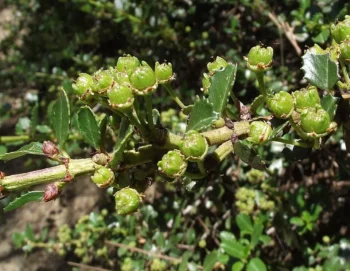
Mason’s Ceanothus: A Rare California Native Worth Protecting
Meet Mason’s ceanothus (Ceanothus masonii), one of California’s most endangered native shrubs. This perennial beauty might not be sitting on your local nursery’s shelves, and there’s a very good reason why – it’s critically rare and desperately needs our protection.
What Makes Mason’s Ceanothus Special?
Mason’s ceanothus is a multi-stemmed woody shrub that typically grows less than 13-16 feet tall, though it usually stays much smaller in its natural habitat. Like its ceanothus cousins, it produces clusters of small, white to pale blue flowers that create a lovely display during its blooming season. But what truly makes this plant special isn’t just its beauty – it’s its incredible rarity.
A True California Endemic
This native shrub calls only one place home: Monterey County, California. Unlike many plants that spread across multiple states or regions, Mason’s ceanothus is what we call endemic – it exists naturally nowhere else on Earth. This makes every single plant incredibly precious from a conservation standpoint.
- Species observed
- No observations
The Rarity Reality Check
Here’s where things get serious: Mason’s ceanothus has a Global Conservation Status of S1, which translates to Critically Imperiled. This means there are typically only five or fewer known populations, with very few remaining individuals (usually fewer than 1,000 plants total). To put this in perspective, there are more giant pandas in the world than there are Mason’s ceanothus plants!
Should You Try to Grow It?
The short answer is: only if you can source it absolutely responsibly. This means:
- Never collect from wild populations (this could push the species closer to extinction)
- Only purchase from reputable native plant nurseries that propagate from legally obtained, documented sources
- Consider it only if you’re committed to conservation and have experience with rare natives
Growing Conditions and Care
If you’re fortunate enough to obtain Mason’s ceanothus through proper conservation channels, here’s what it needs:
Climate: Hardy in USDA zones 9-10, thriving in Mediterranean-type climates with dry summers and mild, wet winters.
Soil: Well-draining soil is absolutely essential. Like most ceanothus species, it can’t tolerate waterlogged conditions.
Water: Once established, it’s quite drought-tolerant. Provide regular water the first year, then reduce to minimal supplemental watering.
Sun: Prefers full sun to partial shade.
Maintenance: Minimal pruning needed. Light pruning after flowering can help maintain shape.
Wildlife and Pollinator Benefits
Like other ceanothus species, Mason’s ceanothus likely supports native bees, butterflies, and other pollinators when in bloom. The flowers provide nectar and pollen, while the shrub itself can offer nesting sites and shelter for small wildlife.
Conservation-Minded Alternatives
Given Mason’s ceanothus’s critical rarity, consider these more common California native ceanothus species that offer similar beauty without conservation concerns:
- Ray Hartman ceanothus (Ceanothus ‘Ray Hartman’)
- Dark Star ceanothus (Ceanothus ‘Dark Star’)
- California lilac (Ceanothus thyrsiflorus)
- Carmel creeper (Ceanothus griseus horizontalis)
The Bottom Line
Mason’s ceanothus represents both the incredible diversity of California’s native flora and the fragility of our natural heritage. While it’s a beautiful plant that would grace any native garden, its critically imperiled status means that conservation should come before cultivation. If you’re passionate about rare natives and can source it responsibly, caring for this plant becomes an act of conservation. Otherwise, choosing one of its more common relatives allows you to enjoy ceanothus beauty while supporting the broader native plant movement.
Remember: every plant matters when there are so few left. Let’s keep Mason’s ceanothus around for future generations to appreciate and protect.