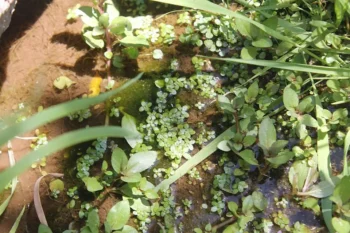
Matted Water-Starwort: A Tiny Native Treasure for Water Gardens
If you’re looking to add authentic native charm to your water garden or pond, let me introduce you to one of the Southeast’s most delicate aquatic gems: matted water-starwort (Callitriche peploides). This diminutive annual forb might not win any beauty contests, but it plays an important role in native wetland ecosystems and can bring a touch of wild authenticity to the right garden setting.
What Is Matted Water-Starwort?
Matted water-starwort is a small, unassuming annual forb that belongs to the diverse world of aquatic plants. As a forb, it’s a non-woody plant that completes its entire life cycle in just one growing season. Don’t expect towering drama from this little guy – it’s all about subtle, naturalistic beauty that mimics what you’d find growing wild in southeastern wetlands.
You might occasionally see this plant listed under the synonym Callitriche peploides Nutt. var. semialata Fassett, but rest assured, we’re talking about the same charming little water plant.
Where Does It Call Home?
This native beauty calls the southeastern United States home, naturally occurring across Alabama, Arkansas, Florida, Georgia, Louisiana, Mississippi, South Carolina, Tennessee, and Texas. It’s perfectly adapted to the warm, humid conditions of the Southeast’s wetland areas.
- Species observed
- No observations
A Word of Caution: Rarity Matters
Here’s something important to know before you start planning your water garden: matted water-starwort has a rarity status of S1 in Arkansas, meaning it’s quite uncommon in that state. If you’re interested in growing this plant, please make sure you source it responsibly from reputable native plant nurseries rather than collecting it from the wild. We want to preserve wild populations while still enjoying these beauties in our gardens!
Is It Right for Your Garden?
Matted water-starwort isn’t for everyone, and that’s perfectly okay! This specialized little plant has some very specific needs that make it suitable only for certain types of gardens:
- Water gardens and pond margins – Perfect for adding native authenticity
- Wetland restoration projects – Helps recreate natural ecosystem conditions
- Bog gardens – Thrives in consistently moist conditions
- Rain gardens – Great for areas that collect water runoff
Growing Conditions: It’s All About the Water
As an obligate wetland plant, matted water-starwort has one non-negotiable requirement: it must have consistent moisture or shallow standing water. This plant almost always occurs in wetlands in nature, so trying to grow it in regular garden beds simply won’t work.
For successful cultivation, provide:
- Shallow water (1-6 inches deep) or constantly moist soil
- Full sun to partial shade
- USDA hardiness zones 7-10
- Good water circulation if growing in ponds
What to Expect: Subtle Beauty
Don’t expect showy blooms or dramatic foliage from matted water-starwort. This plant’s appeal lies in its delicate, naturalistic appearance. The tiny flowers are inconspicuous and wind-pollinated, so it won’t be a major draw for pollinators, but it will contribute to the overall ecosystem health of your water feature.
Care and Maintenance
The good news? Once established in the right conditions, matted water-starwort is relatively low-maintenance. As an annual, it will complete its life cycle in one season, but it may self-seed if conditions are suitable. Simply maintain consistent water levels and remove any debris that might shade out the small plants.
The Bottom Line
Matted water-starwort is a specialized plant for gardeners with specific water features who want to incorporate authentic southeastern natives. While it won’t provide the dramatic impact of water lilies or the pollinator benefits of cardinal flower, it offers something equally valuable: a connection to the subtle beauty of natural wetland ecosystems. Just remember to source it responsibly and only consider it if you have the proper aquatic conditions for success.
If you’re passionate about native water gardening and have the right setup, this little water-starwort could be a perfect addition to your collection of southeastern aquatic natives!