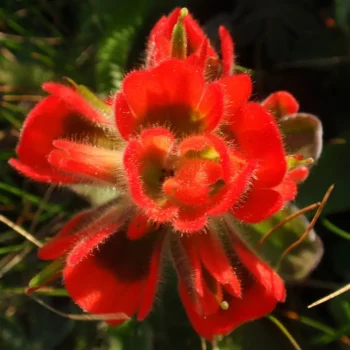
Mendocino Coast Indian Paintbrush: A Rare Coastal Gem Worth Protecting
If you’ve ever wandered the rugged coastlines of Northern California or Southern Oregon, you might have been lucky enough to spot the stunning Mendocino Coast Indian paintbrush (Castilleja mendocinensis). This vibrant wildflower is like finding a hidden treasure – beautiful, but incredibly rare and deserving of our respect and protection.
What Makes This Plant Special?
The Mendocino Coast Indian paintbrush is a perennial forb herb that brings brilliant splashes of red-orange color to coastal landscapes. What you might think are flowers are actually colorful modified leaves called bracts, which surround the plant’s true tubular flowers. This clever design creates a stunning display that’s hard to miss when it blooms.
This native beauty belongs to the paintbrush family and has a fascinating botanical history, with the synonym Castilleja latifolia Hook. & Arn. ssp. mendocinensis Eastw. reflecting its classification journey over time.
Where Does It Call Home?
As its common name suggests, this species is native to a very specific region – the coastal areas of California and Oregon. It’s perfectly adapted to the unique conditions found along the Mendocino Coast, where cool, moist ocean breezes meet well-draining coastal soils.
- Species observed
- No observations
A Word of Caution: This Plant Needs Our Protection
Here’s where we need to have a serious conversation. The Mendocino Coast Indian paintbrush has a Global Conservation Status of S2, meaning it’s imperiled due to extreme rarity. With typically only 6 to 20 occurrences and fewer than 1,000 to 3,000 remaining individuals, this species is walking a tightrope toward extinction.
What does this mean for gardeners? If you’re considering adding this stunning plant to your garden, please proceed with extreme caution and responsibility. Only source plants or seeds from reputable native plant nurseries that practice ethical collection and propagation methods. Never collect from wild populations – this could push local populations closer to the brink.
Garden Design and Landscape Role
In the right setting, Mendocino Coast Indian paintbrush can serve as a spectacular accent plant in:
- Coastal native gardens
- Wildflower meadows
- Naturalistic landscapes that mimic coastal prairie habitats
- Conservation-focused gardens
Its vibrant bracts create stunning focal points and work beautifully alongside other coastal natives. However, remember that this isn’t your typical garden center plant – it’s a specialized species with specific needs.
Wildlife and Pollinator Benefits
Like other Indian paintbrush species, this plant is a pollinator magnet. Its tubular flowers are particularly attractive to hummingbirds, while native bees and other beneficial insects also visit for nectar. By supporting this rare species, you’re also supporting the coastal wildlife that depends on it.
Growing Conditions and Care
This is where things get interesting – and challenging. Mendocino Coast Indian paintbrush is partially parasitic, meaning it forms connections with the roots of host plants to obtain some nutrients. This hemiparasitic nature makes it notoriously difficult to grow outside its natural habitat.
If you’re determined to try growing it, you’ll need:
- USDA Hardiness Zones 8-10 (coastal climate conditions)
- Well-draining soil that mimics coastal conditions
- Host plants nearby (native grasses and other coastal species)
- Cool, moist conditions similar to its natural coastal environment
- Patience and realistic expectations
The Bottom Line: Conservation Over Cultivation
While the Mendocino Coast Indian paintbrush is undeniably beautiful and would make a stunning addition to the right garden, its imperiled status means we should think twice before attempting to grow it. Instead, consider supporting conservation efforts for this species and explore other, more common Indian paintbrush species for your garden.
If you do decide to grow this rare beauty, make sure you’re doing so responsibly with properly sourced plants, and consider your garden a small part of a larger conservation effort. Sometimes the best way to love a plant is to admire it in its natural habitat and work to protect the wild spaces where it belongs.
Remember, every rare plant we protect today is a gift we leave for future generations of both gardeners and wildlife. The Mendocino Coast Indian paintbrush deserves our respect, our protection, and our commitment to keeping it painting the coastal landscape for years to come.