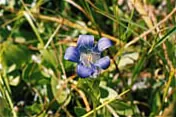
Mendocino Gentian: A Rare Jewel for Wetland Gardens
If you’re passionate about native plants and love a good conservation challenge, the Mendocino gentian (Gentiana setigera) might just capture your heart. This delicate perennial wildflower is one of California’s botanical treasures, though it comes with some serious considerations that every responsible gardener should know about.
What Makes Mendocino Gentian Special?
The Mendocino gentian is a true West Coast native, naturally occurring only in California and Oregon. This petite herbaceous perennial belongs to the gentian family, known for their stunning tubular flowers in shades of blue and purple. As a forb (that’s botanist-speak for a non-woody flowering plant), it grows close to the ground and dies back each winter, returning faithfully each spring from its underground root system.
You might also see this plant listed under its scientific synonym, Gentiana bisetaea, but Gentiana setigera is the accepted name today.
Where Does It Call Home?
This gentian has a rather exclusive address – it’s found only in California and Oregon, with a particular fondness for the coastal regions around Mendocino County (hence the common name). It’s what we call an endemic species, meaning it evolved in this specific region and occurs nowhere else naturally in the world.
- Species observed
- No observations
The Conservation Reality Check
Here’s where things get serious: Mendocino gentian has a Global Conservation Status of S2, which means it’s considered Imperiled. In plain English, this plant is extremely rare, with typically only 6 to 20 known populations and potentially just 1,000 to 3,000 individual plants remaining in the wild. This rarity makes it especially vulnerable to extinction.
If you’re considering adding this plant to your garden, please ensure you source it only from reputable native plant nurseries that propagate their own stock rather than collecting from wild populations. Never, ever collect seeds or plants from natural habitats.
It’s All About the Water
The Mendocino gentian is what botanists call an obligate wetland species – it almost always occurs in wetlands and requires consistently moist to wet conditions. This makes it quite different from many other garden perennials that prefer well-draining soil. Think bogs, marsh edges, seasonal wetlands, and other soggy spots that most plants would find challenging.
Garden Design and Landscaping Role
This isn’t your typical border perennial! Mendocino gentian is best suited for:
- Native plant gardens focused on wetland species
- Rain gardens and bioswales
- Bog gardens or constructed wetlands
- Conservation-focused landscapes
- Naturalized areas near ponds or streams
Its delicate flowers and low-growing habit make it perfect for adding subtle color and native authenticity to wet areas where few other flowering plants thrive.
Growing Conditions and Care
Successfully growing Mendocino gentian requires mimicking its natural wetland habitat:
- Moisture: Consistently moist to wet soil year-round
- Light: Full sun to partial shade
- Soil: Poorly draining, organic-rich soil
- Climate: Likely hardy in USDA zones 8-10, matching its coastal California and Oregon range
Pollinator and Wildlife Benefits
While specific research on this rare species is limited, gentians in general are known to attract native bees, butterflies, and other pollinators. By growing native plants like Mendocino gentian, you’re supporting the intricate web of relationships between plants and wildlife that evolved together over thousands of years.
Should You Grow It?
The answer depends on your gardening goals and situation. Consider Mendocino gentian if you:
- Have naturally wet areas in your landscape
- Are creating a wetland or rain garden
- Want to support conservation of rare native species
- Live within its native range and can provide appropriate conditions
- Can source plants responsibly from propagated stock
However, this plant might not be right for you if you have typical garden conditions with well-draining soil, or if you’re looking for a low-maintenance plant that doesn’t require specialized care.
The Bottom Line
Mendocino gentian represents both an opportunity and a responsibility. Growing this rare native can contribute to conservation efforts and create habitat for local wildlife, but it requires dedication to providing the right growing conditions and sourcing plants ethically. If you’re up for the challenge and have the right spot in your garden, this little gentian can be a meaningful addition to your collection of native plants.
Remember, gardening with rare natives isn’t just about adding another pretty flower to your landscape – it’s about becoming a steward of biodiversity and helping ensure that future generations can enjoy these botanical treasures too.