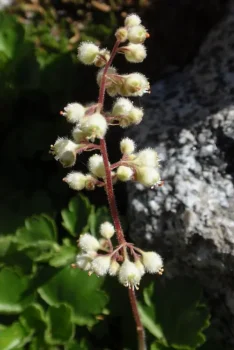
Merriam’s Alumroot: A Hidden Gem for West Coast Native Gardens
If you’re looking to add a touch of understated elegance to your Pacific Coast garden, let me introduce you to a delightful native that deserves more attention: Merriam’s alumroot (Heuchera merriamii). This charming perennial might not be as flashy as some of its coral bell cousins, but it brings a quiet beauty and authentic regional character that’s hard to beat.
What is Merriam’s Alumroot?
Merriam’s alumroot is a native perennial forb that forms attractive basal rosettes of rounded, lobed leaves. Don’t let the technical term forb scare you – it simply means this is an herbaceous flowering plant that doesn’t develop woody stems. Think of it as nature’s version of a living carpet, but one that sends up graceful sprays of delicate flowers when the mood strikes.
You might occasionally see this plant listed under its synonym Heuchera pringlei, but rest assured, we’re talking about the same lovely species that has been quietly beautifying Western landscapes for countless generations.
Where Does It Call Home?
This Pacific native has a relatively modest range, naturally occurring in California and Oregon. It’s perfectly adapted to the unique growing conditions of these mountainous regions, making it an excellent choice for gardeners who want to create landscapes that truly reflect their local ecosystem.
- Species observed
- No observations
A Word About Conservation
Here’s something important to know: Merriam’s alumroot is considered vulnerable in its native range, with a conservation status of S3. This means it’s somewhat rare and could be at risk if not properly protected. The good news? You can absolutely still grow this beauty in your garden – just make sure you source it responsibly from reputable native plant nurseries that propagate their own stock rather than wild-collecting.
Why Your Garden (and Local Wildlife) Will Love It
Beyond its conservation value, Merriam’s alumroot offers several compelling reasons to earn a spot in your landscape:
- Authentic regional character: Nothing says California native garden quite like plants that actually belong there
- Pollinator magnet: Those delicate white to greenish flower sprays are beloved by native bees and other beneficial insects
- Low maintenance: Once established, this tough little plant asks for very little from busy gardeners
- Versatile design element: Perfect for rock gardens, woodland settings, or as groundcover in shaded areas
The Perfect Spots for Merriam’s Alumroot
This adaptable native thrives in several garden styles:
- Rock gardens: Its compact form and drought tolerance make it ideal for rocky, well-draining spots
- Woodland gardens: Naturally adapted to dappled shade and forest conditions
- Native plant gardens: An authentic addition to any regional native landscape
- Shade gardens: Brings texture and seasonal interest to challenging shady areas
Growing Conditions That Make It Happy
Merriam’s alumroot is surprisingly accommodating, but like any plant, it has its preferences:
- Light: Partial shade to full shade (morning sun is fine, but protect from harsh afternoon sun)
- Soil: Well-draining is key – rocky or sandy soils are perfect
- Water: Moderate water during establishment, then quite drought tolerant
- Climate: Hardy in USDA zones 7-9, perfectly suited to West Coast conditions
Planting and Care Tips
Getting started with Merriam’s alumroot is refreshingly straightforward:
- Best planting time: Spring, after the last frost risk has passed
- Soil preparation: Ensure excellent drainage – amend heavy clay soils with coarse sand or gravel
- Spacing: Allow room for the rosettes to spread naturally
- Watering: Regular water the first year, then back off once roots are established
- Maintenance: Divide every 3-4 years to keep clumps vigorous and prevent overcrowding
The Bottom Line
Merriam’s alumroot might not be the showiest plant in the garden center, but for West Coast gardeners who appreciate authentic native beauty and want to support local ecosystems, it’s a genuine treasure. Its combination of low-maintenance growing habits, pollinator benefits, and regional authenticity makes it a smart choice for sustainable landscaping.
Just remember to source your plants responsibly – with its vulnerable conservation status, every garden-grown plant helps ensure this lovely native continues to grace our landscapes for generations to come. Sometimes the most meaningful garden choices are the quiet ones that connect us more deeply to the places we call home.