Michigan Lily: A Stunning Native Wildflower for Your Garden
If you’re looking to add a splash of fiery color to your native plant garden, the Michigan lily (Lilium michiganense) might just be your new favorite wildflower. This gorgeous native perennial brings the drama with its distinctive orange blooms and impressive height, making it a showstopper in any landscape.
What Makes Michigan Lily Special?
The Michigan lily is a true North American native, belonging to the lily family and classified as a herbaceous perennial forb. Unlike woody plants, this beauty dies back to the ground each winter and returns from underground bulbs each spring, ready to put on another spectacular show.
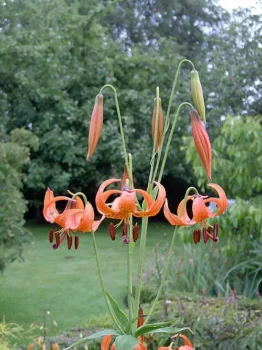
What really sets this lily apart is its unique flower structure. The blooms feature recurved petals that curve dramatically backward, creating the classic turk’s cap appearance. These orange to red-orange flowers are adorned with dark purple spots and dangle gracefully from the stem, almost like natural lanterns swaying in the breeze.
Where Does Michigan Lily Grow Wild?
Despite its name, the Michigan lily isn’t limited to the Great Lakes state. This adaptable native has quite an impressive range, naturally occurring across much of eastern and central North America. You’ll find wild populations in Alabama, Arkansas, Georgia, Illinois, Indiana, Iowa, Kansas, Kentucky, Michigan, Minnesota, Mississippi, Missouri, Nebraska, New York, Ohio, Oklahoma, Pennsylvania, South Dakota, Tennessee, Wisconsin, and Ontario, Canada.
- Species observed
- No observations
A Note About Conservation
While Michigan lily has a broad natural range, it’s worth noting that this beautiful wildflower is considered rare in Alabama, where it holds an S1 rarity status. If you’re planning to add this lily to your garden, please make sure you’re purchasing from reputable nurseries that sell responsibly sourced, nursery-propagated plants rather than wild-collected specimens.
Perfect Spots for Michigan Lily in Your Landscape
Michigan lily typically grows 3-6 feet tall, making it an excellent choice for the back of perennial borders or as a stunning accent plant in naturalized areas. Its height and bold blooms make it particularly effective when planted in groups of three or more.
This versatile native works wonderfully in several garden settings:
- Native plant gardens and prairie edges
- Woodland garden margins
- Rain gardens and bioswales
- Cottage garden borders
- Areas where you want to attract pollinators
Growing Conditions and Care
One of the best things about Michigan lily is its adaptability to different growing conditions. As a facultative wetland plant, it’s perfectly happy in moist to wet soils but can also tolerate periods of drier conditions once established.
Here’s what your Michigan lily prefers:
- Sunlight: Partial shade to full sun (morning sun with afternoon shade is ideal)
- Soil: Moist, well-draining soil; tolerates clay soils well
- Hardiness: USDA zones 3-8
- Water: Consistent moisture, especially during growing season
Planting and Care Tips
Michigan lily grows from bulbs, which should be planted in fall for blooms the following summer. Plant bulbs about three times their height deep and space them 12-18 inches apart. A good layer of mulch helps retain moisture and suppress weeds.
Once established, these lilies are relatively low-maintenance. Avoid disturbing the bulbs once planted, as they don’t like being moved around. Allow the foliage to die back naturally in fall – this helps the bulb store energy for next year’s spectacular show.
Wildlife and Pollinator Benefits
Michigan lily is a pollinator magnet! The bright orange blooms are particularly attractive to butterflies, native bees, and even hummingbirds. The flowers provide both nectar and pollen, making them valuable resources for beneficial insects throughout the summer blooming period.
Why Choose Michigan Lily?
Adding Michigan lily to your garden means you’re not just getting a beautiful flowering plant – you’re supporting local ecosystems and providing habitat for native wildlife. Its stunning blooms, impressive height, and relatively easy care requirements make it an excellent choice for gardeners looking to incorporate more native plants into their landscapes.
Just remember to source your plants responsibly, and you’ll be rewarded with years of gorgeous orange blooms and the satisfaction of supporting native biodiversity right in your own backyard!