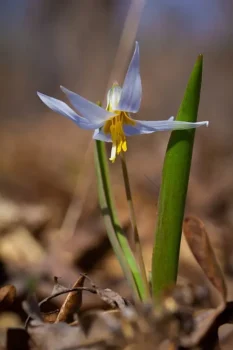
Midland Fawnlily: A Rare Prairie Gem for Your Native Garden
If you’re looking to add a touch of early spring magic to your native garden, the midland fawnlily might just be the perfect choice. This charming little wildflower brings delicate beauty to prairie landscapes and naturalized gardens across the central United States. But before you rush to plant it, there’s something important you should know about this special native.
What Makes Midland Fawnlily Special
The midland fawnlily (Erythronium mesochoreum) is a perennial forb that belongs to the lily family. Don’t let the technical term forb intimidate you – it simply means it’s an herbaceous flowering plant without woody stems. This native beauty produces a single, nodding white to pale pink flower on each stem, creating an elegant display in early spring when most other plants are still sleeping.
You might also see this plant listed under its botanical synonyms Erythronium albidum var. coloratum or Erythronium albidum var. mesochoreum in older gardening references, but rest assured – they’re all the same lovely plant.
Where Midland Fawnlily Calls Home
This prairie native has made its home across the heart of America, naturally occurring in Arkansas, Illinois, Indiana, Iowa, Kansas, Missouri, Nebraska, Oklahoma, and Texas. It’s perfectly adapted to the climate and growing conditions of the Great Plains and prairie regions.
- Species observed
- No observations
A Word of Caution: Rarity Matters
Here’s where things get important: midland fawnlily is considered rare in some areas, particularly in Arkansas prairie habitats where it has a rarity status of S1S2. This means it’s quite uncommon and potentially vulnerable. If you decide to add this beauty to your garden, please make sure you’re purchasing from reputable native plant nurseries that propagate their own stock rather than wild-collecting. Never dig plants from the wild – it’s not only harmful to wild populations but often illegal.
Why You’ll Love Growing Midland Fawnlily
There are several compelling reasons to consider this native gem for your landscape:
- Early spring interest when little else is blooming
- Low maintenance once established
- Supports native pollinators with early nectar
- Perfect for prairie gardens and naturalized areas
- Adapted to regional climate conditions
- Goes dormant in summer, making space for other plants
Perfect Garden Settings
Midland fawnlily shines in prairie gardens, naturalized woodland edges, and native plant landscapes. It’s particularly well-suited for gardeners who want to create authentic regional ecosystems or add early season interest to areas that might otherwise look bare in late winter and early spring.
Growing Conditions and Care
One of the best things about native plants is how well-adapted they are to local conditions, and midland fawnlily is no exception. This hardy perennial thrives in USDA hardiness zones 4-8, making it suitable for much of the central United States.
The plant prefers well-drained soils and can handle everything from partial shade to full sun, though it seems to appreciate some protection from the harshest afternoon sun. Like many spring ephemerals, it completes most of its growth cycle early in the season, then goes dormant during the hot summer months – a clever adaptation to prairie conditions.
Planting and Care Tips
Getting midland fawnlily established in your garden is fairly straightforward:
- Plant bulbs in fall for spring emergence
- Choose a location with good drainage
- Allow the plant to complete its natural cycle – don’t cut back foliage until it yellows
- Be patient – it may take a year or two to become fully established
- Minimal fertilization needed – these natives prefer lean soils
- Water during active growth, but allow dormancy in summer
Supporting Pollinators
By planting midland fawnlily, you’re providing crucial early-season nectar for native bees and other pollinators when few other flowers are available. This early bloom time makes it particularly valuable in supporting pollinator populations through the challenging transition from winter to spring.
The Bottom Line
Midland fawnlily is a wonderful choice for gardeners who want to support native ecosystems while adding unique early spring beauty to their landscapes. Just remember to source your plants responsibly from nurseries that propagate rather than wild-collect, especially given this plant’s rare status in some areas. With minimal care and the right conditions, you’ll be rewarded with years of delicate spring blooms that connect your garden to the natural heritage of America’s prairies.