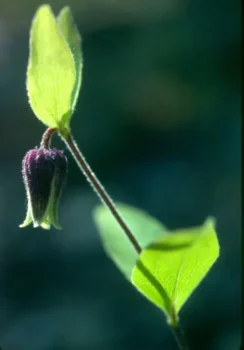
Millboro Leather Flower: Virginia’s Rarest Clematis
If you’re a native plant enthusiast with a keen eye for botanical treasures, you may have heard whispers about the Millboro leather flower (Clematis viticaulis). This isn’t your garden-variety clematis – it’s one of Virginia’s most critically endangered wildflowers, and there’s a very good reason why you won’t find it at your local nursery.
What Makes This Plant So Special?
The Millboro leather flower is a perennial herbaceous wildflower that belongs to the buttercup family. Unlike its showy garden cousins, this modest clematis produces small, bell-shaped purple flowers that nod gracefully on slender stems. The flowers have a distinctive leathery texture that gives the plant its common name, and they typically bloom from late spring through early summer.
As a forb herb, this plant lacks the woody tissue of climbing clematis varieties you might know. Instead, it grows as a low herbaceous perennial, emerging from ground-level buds each spring.
A True Virginia Native – But Barely Hanging On
Here’s where things get serious: Clematis viticaulis is found nowhere else in the world except Virginia. Even within the state, it’s restricted to a tiny area in the limestone regions of the Shenandoah Valley. This plant has earned a Global Conservation Status of S1, meaning it’s critically imperiled with typically fewer than 1,000 individuals remaining in the wild.
- Species observed
- No observations
Why You Shouldn’t Try to Grow It (And What to Do Instead)
Before you start scouring the internet for seeds or plants, pump the brakes. The Millboro leather flower’s extreme rarity means it should be left to professional conservation efforts. Here’s why attempting to cultivate it isn’t a great idea:
- It requires very specific limestone soil conditions that are difficult to replicate
- The plant is extremely sensitive to environmental changes
- Any wild collection would further threaten the remaining populations
- Even with perfect conditions, cultivation success rates are extremely low
Growing Conditions (For Educational Purposes)
If this plant weren’t so rare, it would require:
- Well-drained, alkaline soils with high limestone content
- Partial shade conditions
- Cool, consistently moist (but not wet) soil
- USDA hardiness zones 6-8
- Minimal soil disturbance
Supporting Conservation Instead
Rather than trying to grow this rarity, consider supporting organizations working to protect Virginia’s native plant heritage. You can also create habitat for other native Virginia clematis species and wildflowers that aren’t critically endangered.
Alternative Native Clematis Options
If you’re drawn to native clematis, consider these more common alternatives that won’t compromise rare populations:
- Virgin’s bower (Clematis virginiana) – a vigorous climbing native
- Purple clematis (Clematis occidentalis) – if you’re in the right climate zone
- Other native Virginia wildflowers that thrive in limestone soils
The Bottom Line
The Millboro leather flower represents both the incredible diversity of our native flora and the fragility of rare ecosystems. While we can’t all grow this botanical treasure in our gardens, we can appreciate its uniqueness and support the conservation efforts working to ensure it doesn’t disappear forever. Sometimes the best way to love a plant is to admire it from afar and protect the wild spaces where it belongs.
If you’re passionate about rare natives, consider volunteering with local botanical societies or contributing to habitat preservation efforts. That’s where this little clematis – and many other rare beauties – need our help the most.