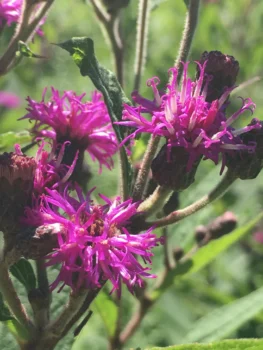
Missouri Ironweed: A Towering Native Beauty for Your Garden
If you’re looking for a native plant that makes a bold statement while supporting local wildlife, Missouri ironweed (Vernonia missurica) might just be your new garden favorite. This impressive perennial forb brings height, color, and ecological value to any landscape willing to embrace its wild beauty.
What Makes Missouri Ironweed Special?
Missouri ironweed is a true native of the lower 48 states, with a natural range spanning from the Great Plains to the eastern United States. You’ll find this hardy perennial growing naturally across 19 states, including Alabama, Arkansas, Florida, Illinois, Indiana, Iowa, Kansas, Kentucky, Louisiana, Massachusetts, Michigan, Mississippi, Missouri, Nebraska, New Mexico, Ohio, Oklahoma, Tennessee, and Texas.
- Species observed
- No observations
As a native species, Missouri ironweed has evolved alongside local wildlife and climate conditions, making it an excellent choice for gardeners seeking low-maintenance plants that truly belong in their landscape.
Garden Appeal and Design Role
Standing tall at up to 6 feet, Missouri ironweed commands attention in any garden setting. Its coarse-textured green foliage provides a sturdy backdrop throughout the growing season, while clusters of conspicuous purple flowers steal the show in late summer. The moderate growth rate means you won’t wait forever to see results, but the plant won’t overwhelm your space either.
This single-crowned beauty works wonderfully as:
- A dramatic background plant in perennial borders
- A key species in prairie and native plant gardens
- A naturalizing element in rain gardens and wet areas
- A pollinator magnet in butterfly gardens
Perfect Garden Settings
Missouri ironweed thrives in naturalized landscapes, prairie restorations, and native plant gardens. Its ability to adapt to various moisture conditions makes it particularly valuable in rain gardens and areas with fluctuating water levels. The plant’s facultative wetland status means it’s equally happy in moist and moderately dry conditions, though it shows a preference for consistent moisture.
Growing Conditions and Care
One of the best things about Missouri ironweed is its adaptability to different soil types. Whether you have clay, sand, or something in between, this resilient native can handle it. Here’s what it prefers:
- Soil pH: Slightly acidic to neutral (5.0-7.0)
- Moisture: Medium water needs, drought tolerance is low
- Sun exposure: Full sun (shade intolerant)
- Hardiness: Cold hardy to -33°F, suitable for zones 4-8
- Soil texture: Adapts to coarse, medium, or fine-textured soils
Planting and Establishment Tips
Missouri ironweed is routinely available from native plant nurseries and can be established through several methods:
- Seeds: Require cold stratification; expect about 378,000 seeds per pound
- Container plants: The easiest option for most gardeners
- Bare root: Plant in early spring
- Sprigs: Possible but less common
Keep in mind that seedlings show low vigor initially, so be patient with seed-grown plants. Container plants will establish more quickly and reliably.
Seasonal Interest and Maintenance
Missouri ironweed truly shines during its late summer bloom period when purple flowers create a spectacular display. The plant remains conspicuous through fall, though it’s not particularly notable for autumn color. As a non-woody perennial, it dies back to the ground each winter.
Maintenance is minimal once established. The plant has no known allelopathic properties, doesn’t require special fertilization (medium fertility needs), and shows high fire tolerance if you’re managing prairie areas.
Wildlife and Pollinator Benefits
While specific wildlife benefits weren’t detailed in our research, Missouri ironweed’s late summer purple blooms are known to attract butterflies, native bees, and other pollinators when many other flowers are fading. This timing makes it particularly valuable for extending the pollinator season in your garden.
Is Missouri Ironweed Right for Your Garden?
Consider Missouri ironweed if you:
- Want to support native plant communities
- Have space for a tall (6-foot) plant
- Garden in full sun conditions
- Appreciate late-season color
- Want to attract pollinators
- Live in its natural range
However, you might want to pass if you:
- Have a very small garden with limited space
- Garden primarily in shade
- Prefer plants that don’t die back in winter
- Need extremely drought-tolerant plants
Missouri ironweed brings authentic native beauty and ecological value to the right garden setting. Its towering purple blooms and wildlife benefits make it a worthy addition to any landscape celebrating our natural heritage.