Mohr’s Barbara’s Buttons: A Rare Southeastern Treasure Worth Protecting
Meet Mohr’s Barbara’s buttons (Marshallia mohrii), a charming yet vulnerable native wildflower that deserves a special place in conservation-minded gardens. This delicate perennial might not be the showiest plant in your garden, but its quiet beauty and ecological importance make it a true treasure for those dedicated to preserving our native flora.
What Makes This Plant Special
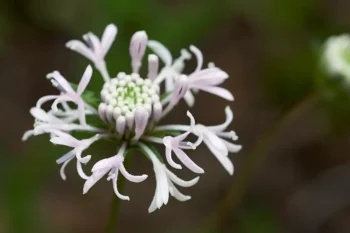
Mohr’s Barbara’s buttons is a native forb – essentially a non-woody perennial that dies back to the ground each winter and returns fresh each spring. This modest plant produces clusters of small, daisy-like flowers that range from pristine white to soft pale pink, creating flat-topped displays that seem to float above narrow, linear leaves. The blooms typically appear from spring through early summer, offering a subtle but elegant addition to any native plant collection.
Where You’ll Find It Growing Wild
This southeastern specialty calls Alabama, Florida, Georgia, and North Carolina home, thriving in the region’s unique wetland ecosystems. You won’t find Mohr’s Barbara’s buttons growing wild anywhere else in the world – it’s exclusively ours to cherish and protect.
- Species observed
- No observations
A Plant That Needs Our Help
Important Conservation Note: Before you get too excited about adding this beauty to your garden, there’s something crucial you need to know. Mohr’s Barbara’s buttons is considered vulnerable to extinction, with a global conservation status that puts it at risk. It’s even listed as Threatened in the United States. This means if you choose to grow it, you must source your plants responsibly from reputable native plant nurseries that propagate from legally obtained seed or cuttings – never dig plants from the wild.
Perfect Spots for Planting
If you can source this rare gem ethically, Mohr’s Barbara’s buttons works beautifully in:
- Native wildflower gardens
- Rain gardens and bioswales
- Naturalized landscape areas
- Conservation plantings
- Wetland restoration projects
Growing Conditions That Make It Happy
This wetland-loving plant has specific preferences that mirror its natural habitat:
- Moisture: Prefers consistently moist to wet soils and can handle seasonal flooding
- Light: Thrives in partial shade to full sun
- Climate: Hardy in USDA zones 8-9
- Soil: Adapts to various soil types as long as moisture needs are met
Planting and Care Made Simple
Once you’ve secured responsibly sourced plants, caring for Mohr’s Barbara’s buttons is refreshingly straightforward:
- Plant in spring when the soil is workable
- Ensure consistent moisture – this isn’t a drought-tolerant plant
- Mulch lightly to retain soil moisture
- Minimal maintenance required once established
- Allow plants to go dormant naturally in winter
Benefits for Wildlife
While small in stature, Mohr’s Barbara’s buttons punches above its weight when it comes to supporting local wildlife. The nectar-rich flowers attract native bees, butterflies, and other beneficial pollinators, making it a valuable addition to any wildlife-friendly garden. Every plant you grow helps support the native ecosystem and provides critical habitat for creatures that have evolved alongside this species.
Should You Grow It?
The answer is a cautious yes – but only if you can source it responsibly. By growing Mohr’s Barbara’s buttons in your garden, you’re participating in important conservation efforts and helping ensure this vulnerable species survives for future generations. Just remember that with great beauty comes great responsibility. This isn’t a plant to collect casually; it’s one to grow with purpose and respect for its precarious status in the wild.
Consider Mohr’s Barbara’s buttons not just as a garden plant, but as a living piece of southeastern natural heritage that you have the privilege of helping preserve. In a world where so many native plants are disappearing, every responsibly grown specimen becomes an ark for the future.