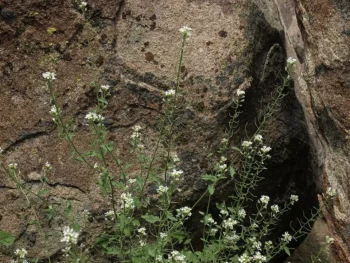
Mojave Halimolobos: A Rare Desert Gem That’s Not for Every Garden
Meet Mojave halimolobos (Halimolobos jaegeri), one of the desert’s more elusive botanical treasures. This little-known member of the mustard family calls the harsh landscapes of the Mojave Desert home, but don’t expect to find it at your local nursery anytime soon. Let’s explore why this rare perennial herb might capture your imagination, even if it doesn’t quite make it into your garden.
What Makes Mojave Halimolobos Special?
Mojave halimolobos is a perennial forb – essentially a non-woody flowering plant that returns year after year. As part of the mustard family, it produces small, delicate flowers that add subtle beauty to the desert landscape. This native species has adapted to survive in some of the most challenging growing conditions imaginable, making it a true testament to nature’s resilience.
Where Does It Call Home?
This desert specialist is native to the southwestern United States, specifically found in California and Nevada. Its range is quite limited, sticking to the Mojave Desert region where it has evolved to thrive in extreme conditions that would challenge most other plants.
- Species observed
- No observations
The Rarity Reality Check
Here’s where things get serious: Mojave halimolobos has a Global Conservation Status of S4S5T3?, indicating some level of conservation concern. This rarity status means that if you’re lucky enough to encounter this plant in the wild, you should admire it from a distance and never collect seeds or plants from natural populations.
For the truly dedicated native plant enthusiast who wants to attempt growing this species, only use responsibly sourced material from reputable native plant specialists – though finding such sources may prove nearly impossible.
Why Most Gardeners Should Admire from Afar
Let’s be honest: Mojave halimolobos isn’t your typical garden-center find, and there are good reasons for that:
- Extremely specialized growing requirements adapted to harsh desert conditions
- Limited availability due to its rarity status
- Challenging propagation and cultivation needs
- Better suited for specialized botanical collections than home gardens
Growing Conditions (For the Truly Adventurous)
If you’re determined to attempt growing Mojave halimolobos, you’ll need to recreate desert conditions:
- Full sun exposure
- Extremely well-draining, sandy or rocky soil
- Minimal water once established
- USDA hardiness zones 8-10 (estimated based on native range)
- Protection from humid conditions
Better Alternatives for Desert Gardens
Instead of trying to grow this rare species, consider these more readily available native alternatives that offer similar desert charm:
- Desert marigold (Baileya multiradiata)
- Brittlebush (Encelia farinosa)
- Desert lupine (Lupinus arizonicus)
- Ghost plant (Graptopetalum paraguayense)
The Bottom Line
Mojave halimolobos represents the fascinating diversity of our native flora, but it’s best appreciated in its natural habitat or through conservation efforts rather than home cultivation. For most gardeners, supporting desert plant conservation and choosing more readily available native alternatives will have a greater positive impact on both your garden success and regional ecosystems.
Sometimes the most beautiful way to honor a rare plant is simply knowing it exists and working to protect the wild spaces where it thrives.