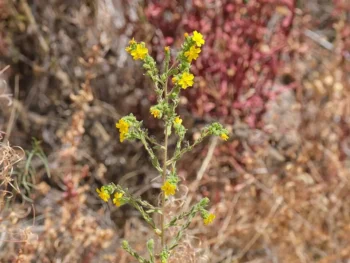
Mojave Tarweed: A Rare Desert Gem for Your Native Garden
Meet Mojave tarweed (Deinandra mohavensis), a charming little annual that brings the wild beauty of California’s Mojave Desert right to your garden. This unassuming native herb might not win any height contests, but what it lacks in stature, it more than makes up for in desert toughness and ecological value.
What Makes Mojave Tarweed Special?
Mojave tarweed is a true California native, belonging to the sunflower family and perfectly adapted to life in some of the state’s most challenging environments. As an annual forb, this herbaceous plant completes its entire life cycle in one growing season, making the most of brief favorable conditions in the desert.
You might also see this plant listed under its scientific synonym, Hemizonia mohavensis, in older gardening references, but Deinandra mohavensis is the current accepted name.
Where Does It Grow Wild?
This desert specialist calls California home, specifically thriving in the Mojave Desert region. You’ll find wild populations growing in sandy washes, desert flats, and other well-draining locations where few other plants dare to venture.
- Species observed
- No observations
Important Conservation Note
Before you rush to add Mojave tarweed to your garden, there’s something crucial to know: this plant has a conservation status of S2S3, meaning it’s considered rare to uncommon in its native range. While we absolutely encourage growing this beautiful native, please only use seeds or plants from responsible, ethical sources that don’t impact wild populations. Never collect from the wild!
Why Grow Mojave Tarweed?
Despite its rarity in nature, Mojave tarweed can be a delightful addition to the right garden setting. Here’s why desert gardeners are falling in love with this little charmer:
- Authentic desert beauty: Small, cheerful yellow daisy-like flowers that capture the essence of the Mojave
- Pollinator magnet: Native bees, butterflies, and other desert pollinators absolutely love this plant
- Ultra-low maintenance: Once established, it thrives on neglect
- Water-wise: Perfect for xeriscaping and drought-tolerant landscapes
- Aromatic foliage: The leaves have a pleasant, distinctive fragrance
Perfect Garden Settings
Mojave tarweed shines brightest in:
- Native plant and wildflower gardens
- Xeriscape and drought-tolerant landscapes
- Desert-themed garden designs
- Rock gardens with excellent drainage
- Restoration projects in appropriate regions
Growing Conditions and Care
Think desert tough and you’ll understand exactly what Mojave tarweed needs to thrive:
Sunlight: Full sun is essential – this plant has zero tolerance for shade
Soil: Well-draining, sandy, or gravelly soil is a must. Heavy clay or water-retentive soils will quickly kill this desert native
Water: Minimal irrigation once established. Too much water is far more dangerous than too little
Climate: Best suited for USDA hardiness zones 9-11, particularly in arid regions
Planting and Care Tips
Growing Mojave tarweed successfully is all about mimicking its natural desert habitat:
- Timing: Direct seed in fall when cooler temperatures and occasional rains provide natural germination conditions
- Soil prep: Ensure excellent drainage – consider raised beds or slopes if your soil tends to hold water
- Watering: Water sparingly during establishment, then let nature take over
- Maintenance: Allow plants to self-seed for natural population renewal
- Fertilizer: None needed – desert plants prefer lean conditions
Supporting Wildlife
While small in stature, Mojave tarweed punches above its weight when it comes to supporting desert wildlife. Native pollinators depend on plants like this for nectar and pollen, making it an important component of a functioning desert ecosystem.
The Bottom Line
Mojave tarweed is a wonderful choice for gardeners looking to create authentic desert landscapes while supporting native wildlife. Its rarity makes it extra special – just remember to source it responsibly. With minimal care and the right growing conditions, this little desert gem will reward you with cheerful blooms and the satisfaction of growing a true California native.
Ready to add some Mojave Desert magic to your garden? Seek out reputable native plant nurseries or seed suppliers who can provide ethically sourced Mojave tarweed for your landscape adventure.