Mojave Woolly Sunflower: A Rare Desert Gem Worth Protecting
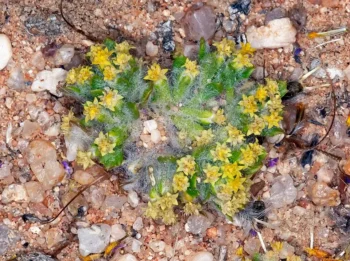
Meet the Mojave woolly sunflower (Eriophyllum mohavense), a petite annual wildflower that’s as rare as it is charming. This California native is one of those special plants that makes you feel like you’ve discovered a hidden treasure – which, in many ways, you have.
A Desert Rarity
The Mojave woolly sunflower is classified as imperiled, with a Global Conservation Status of S2. This means there are typically only 6 to 20 known occurrences in the wild, with fewer than 3,000 individual plants remaining. Found exclusively in California’s Mojave Desert region, this little sunflower is fighting for its survival in an increasingly developed landscape.
- Species observed
- No observations
What Makes It Special
Don’t let its small stature fool you – this annual forb packs a punch with its bright yellow, daisy-like flowers that bloom in spring. The plant gets its woolly name from its fuzzy, grayish foliage that helps it conserve moisture in harsh desert conditions. As a true annual, it completes its entire life cycle in one growing season, making every bloom precious.
Garden Appeal and Design Role
While the Mojave woolly sunflower may be tiny, it brings authentic desert character to specialized native gardens. Its compact form and cheerful blooms make it perfect for:
- Rock gardens with excellent drainage
- Native plant collections focused on rare species
- Desert-themed landscapes
- Conservation gardens dedicated to preserving imperiled species
Pollinator and Wildlife Benefits
Despite its small size, this desert native supports local ecosystems by attracting small native bees and other beneficial insects. Every flower contributes to the complex web of desert life, making its conservation even more important.
Growing Conditions
The Mojave woolly sunflower thrives in USDA hardiness zones 9-11, preferring the harsh but honest conditions of desert environments:
- Sunlight: Full sun exposure
- Soil: Well-draining, sandy or rocky soil
- Water: Minimal irrigation once established
- Climate: Hot, dry summers with cool winters
Planting and Care Tips
Growing this rare beauty requires patience and the right approach:
- Direct seed in fall for spring germination
- Seeds need winter chill to break dormancy
- Provide excellent drainage – soggy soil is this plant’s enemy
- Water sparingly, if at all, once established
- Allow plants to self-seed for natural propagation
The Conservation Conversation
Here’s where we need to have an honest chat: Should you grow the Mojave woolly sunflower? The answer is maybe – but only if you’re committed to conservation and can source seeds or plants responsibly.
Given its imperiled status, we recommend this plant only for serious conservation gardeners who can obtain material from reputable native plant societies, botanical gardens, or conservation programs. Never collect from wild populations, as this could further threaten the species.
If you can’t source it responsibly, consider supporting conservation efforts for this species instead, or plant other native California desert wildflowers that are more abundant and readily available.
A Plant Worth Protecting
The Mojave woolly sunflower represents something precious – a connection to California’s unique desert heritage. Whether you choose to grow it or simply appreciate it from afar, remember that every rare plant tells a story about the landscapes we’re working to preserve. In a world of common garden plants, sometimes the most meaningful choice is protecting the uncommon ones.