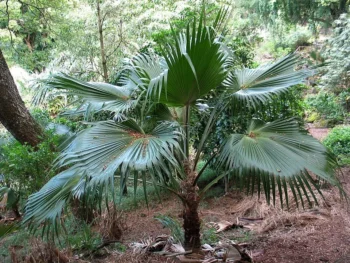
Molokai Pritchardia: A Rare Hawaiian Palm Worth Protecting
If you’re drawn to the exotic beauty of Hawaiian palms, you might have heard whispers about the Molokai pritchardia (Pritchardia lowreyana). This isn’t your everyday garden center palm – it’s one of Hawaii’s rarest native treasures, and there’s a compelling story behind why every gardener should know about it.
What Makes This Palm Special?
The Molokai pritchardia is a stunning fan palm that’s endemic to Hawaii, meaning it exists nowhere else on Earth naturally. This perennial tree typically grows over 13-16 feet tall, though it can stay shorter under certain conditions. What sets it apart from other palms is its distinctive pleated fan-shaped fronds and robust trunk that speaks to its adaptation to Hawaii’s unique climate.
A Plant on the Brink
Here’s the critical part every gardener needs to know: This palm has a Global Conservation Status of S1, which means it’s critically imperiled. With typically 5 or fewer occurrences and very few remaining individuals (less than 1,000), the Molokai pritchardia is dancing on the edge of extinction.
This rarity status means that while this palm would make a spectacular addition to the right garden, it should only be planted using responsibly sourced material from legitimate conservation programs or nurseries working directly with conservation efforts.
Where It Calls Home
As its name suggests, this pritchardia is native to Hawaii, specifically the island of Molokai. It grows naturally in the state’s dry forests and rocky slopes, having adapted to Hawaii’s unique environmental conditions over thousands of years.
- Species observed
- No observations
Growing Conditions and Care
If you’re fortunate enough to source this palm responsibly, here’s what it needs to thrive:
- Climate: USDA Hardiness Zones 10-12 only – this is strictly a tropical/subtropical plant
- Soil: Excellent drainage is absolutely critical; these palms are highly sensitive to waterlogged conditions
- Sun exposure: Full sun to partial shade
- Water: Drought tolerant once established, but appreciates occasional deep watering
- Growth rate: Slow growing, so patience is key
Wetland Considerations
The Molokai pritchardia has a Facultative Upland wetland status in Hawaii, meaning it usually grows in non-wetland areas but can occasionally be found in wetlands. This flexibility makes it adaptable to various moisture conditions, though it still requires good drainage.
Garden Design Role
When grown responsibly, this palm serves as an exceptional specimen tree in tropical and subtropical landscapes. Its architectural form and rarity make it a conversation starter and a living piece of Hawaiian natural history. It’s particularly suited for:
- Tropical garden focal points
- Xerophytic (dry) landscape designs
- Conservation-minded botanical collections
- Educational gardens highlighting endangered species
The Conservation Angle
Here’s where gardening becomes activism: by growing critically endangered plants like the Molokai pritchardia from responsibly sourced material, gardeners become part of the conservation effort. Every plant grown in cultivation represents genetic diversity preserved and potentially contributes to future restoration efforts.
Should You Plant It?
The answer is nuanced. If you live in zones 10-12, have the right growing conditions, and can source this palm through legitimate conservation channels, then yes – you’d be participating in preserving a piece of Hawaii’s natural heritage. However, never purchase plants of questionable origin, as this could contribute to further pressure on wild populations.
If you can’t source it responsibly or don’t have the right climate, consider supporting Hawaiian plant conservation organizations or choosing other native Hawaiian plants that aren’t critically endangered.
A Living Legacy
The Molokai pritchardia represents more than just a beautiful palm – it’s a reminder of how precious and fragile our native plant heritage can be. Whether you end up growing one or simply learning about it, this remarkable palm teaches us that sometimes the most beautiful gardens are the ones that help preserve the natural world for future generations.