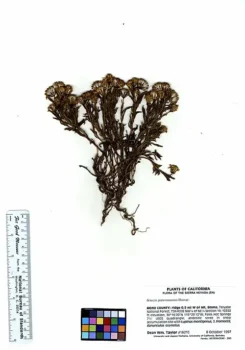
Mono Ragwort: A Rare Gem Worth Protecting in Your Native Garden
If you’re passionate about native plants and conservation, you might have stumbled across Mono ragwort (Senecio pattersonensis) in your research. This little-known wildflower is one of nature’s more elusive treasures, and there’s something both exciting and sobering about considering it for your garden.
What Makes Mono Ragwort Special
Mono ragwort is a perennial forb – essentially a non-woody flowering plant that comes back year after year. Think of it as the botanical equivalent of a reliable friend who shows up every spring without fail. As a member of the sunflower family, it likely produces the characteristic yellow, daisy-like blooms that make Senecio species so recognizable.
This native beauty calls the western United States home, specifically California and Nevada. It’s a true regional specialty that evolved to thrive in the unique conditions of this corner of the country.
- Species observed
- No observations
The Conservation Reality Check
Here’s where things get serious: Mono ragwort has a Global Conservation Status of S2, which means it’s considered Imperiled. In plain English, this plant is extremely rare, with typically only 6 to 20 known populations and somewhere between 1,000 to 3,000 individual plants remaining in the wild.
This rarity status puts Mono ragwort in a special category. While we absolutely want to celebrate and preserve native plants, this particular species needs our protection more than our cultivation.
Should You Grow Mono Ragwort?
The short answer is: only if you can source it responsibly. If you’re considering adding this rare beauty to your garden, here’s what you need to know:
- Never collect seeds or plants from wild populations
- Only purchase from reputable native plant nurseries that can verify their stock came from ethical propagation
- Consider growing it as part of a conservation effort rather than just for aesthetics
- Be prepared that finding authentic Mono ragwort may be nearly impossible due to its rarity
Growing Conditions and Care
Since Mono ragwort is so rare, detailed growing information is limited. However, based on its native habitat in California and Nevada, it likely prefers:
- Well-draining soils typical of western mountainous regions
- Full to partial sun exposure
- Minimal summer water once established
- Protection from extreme cold if grown outside its native range
As a perennial forb, it should return each year from its underground growing points, making it a long-term garden investment if you can successfully establish it.
Alternative Native Options
If you’re drawn to the idea of growing a native ragwort but can’t source Mono ragwort responsibly, consider these more common native Senecio species that offer similar appeal without the conservation concerns:
- Common groundsel (Senecio vulgaris) – though this one can be weedy
- Other regional Senecio species native to your specific area
- Native wildflowers with similar yellow blooms and pollinator benefits
The Bigger Picture
Mono ragwort represents something important in the native plant world: the delicate balance between appreciation and conservation. Sometimes the most loving thing we can do for a rare plant is to admire it from a distance and work to protect its remaining wild habitat.
If you’re passionate about rare natives like Mono ragwort, consider supporting habitat conservation organizations, participating in citizen science projects, or volunteering with local botanical surveys. These actions might do more for the species’ long-term survival than any individual garden planting.
Remember, every rare plant has a story of survival against the odds. Mono ragwort has made it this far – let’s make sure it has a future too.