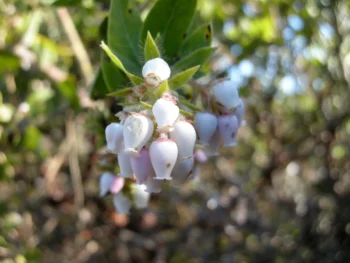
Montara Manzanita: A Rare Coastal Gem for Your Native Garden
If you’re looking to add a touch of California’s wild coastal beauty to your garden, the Montara manzanita (Arctostaphylos montaraensis) might just be the perfect choice. This charming evergreen shrub brings year-round interest with its distinctive reddish bark, delicate flowers, and colorful berries – but there’s an important catch every responsible gardener should know about.
A True California Native with a Story
The Montara manzanita is a perennial shrub that’s as Californian as it gets. This native beauty calls only the Golden State home, specifically the coastal areas around San Mateo County. It’s a multi-stemmed woody plant that typically stays under 13-16 feet tall, making it a manageable addition to most landscapes.
Montara manzanita grows exclusively in California, where it clings to life in very specific coastal habitats. This extremely limited range makes it a true local treasure.
- Species observed
- No observations
Why This Plant Deserves Special Consideration
Important Conservation Note: Before falling head-over-heels for this beautiful shrub, know that Montara manzanita has a Global Conservation Status of S2, meaning it’s imperiled in the wild. With typically only 6 to 20 occurrences and potentially just 1,000 to 3,000 individuals remaining, this plant is extremely rare and vulnerable to extinction.
If you choose to grow Montara manzanita, please only purchase from reputable nurseries that use responsibly sourced, nursery-propagated material – never plants collected from the wild.
What Makes Montara Manzanita Special
Despite its rarity challenges, this manzanita offers unique appeal for the right gardener:
- Year-round beauty: Evergreen foliage provides constant structure
- Stunning bark: Distinctive reddish bark adds winter interest
- Charming flowers: Clusters of white to pink, urn-shaped blooms appear in winter and spring
- Wildlife value: Berries feed birds while flowers attract native bees, butterflies, and hummingbirds
- Drought tolerance: Once established, requires minimal water
Perfect Garden Situations
Montara manzanita shines in:
- Native California plant gardens
- Mediterranean-style landscapes
- Drought-tolerant garden designs
- Coastal gardens (especially in its native range)
- Slopes needing erosion control
- Wildlife habitat gardens
Growing Montara Manzanita Successfully
This coastal native has specific needs that mirror its natural habitat:
Climate: Thrives in USDA hardiness zones 9-10, preferring mild, Mediterranean-style climates.
Sun and Soil: Plant in full sun to partial shade in well-draining, acidic soil. Like most manzanitas, it despises soggy conditions and heavy clay.
Water Wisdom: Here’s where many gardeners go wrong – less is definitely more. Water regularly the first year to establish roots, then back off significantly. Avoid summer watering once established, as this can actually harm the plant.
Planting Tips: Fall planting gives the best results, allowing roots to establish during the rainy season. Dig a hole twice as wide as the root ball but no deeper, and consider adding coarse sand or gravel to improve drainage.
Ongoing Care
Montara manzanita is refreshingly low-maintenance once established:
- Pruning: Light pruning after flowering helps maintain shape
- Fertilizing: Usually unnecessary – these plants evolved in nutrient-poor soils
- Mulching: Use coarse, well-draining mulch like gravel or bark chips
- Watering: Deep, infrequent watering in the first year only
The Bottom Line
Montara manzanita is undeniably beautiful and ecologically valuable, but its rarity means it’s not a plant to choose lightly. If you’re passionate about native plants and committed to responsible gardening practices, this could be a wonderful addition to your landscape. Just remember: only purchase from ethical sources, and consider it a privilege to help preserve this remarkable species in cultivation.
For gardeners seeking similar beauty with less conservation concern, consider other manzanita species like bearberry manzanita (Arctostaphylos uva-ursi) or kinnikinnick, which offer comparable charm without the rarity issues.