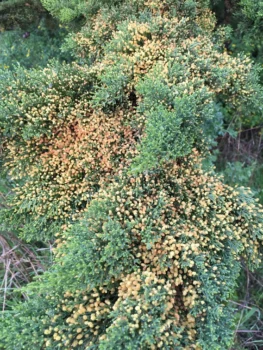
Monterey Cypress: A Rare California Treasure for Your Garden
If you’ve ever driven along California’s dramatic coastline and admired those iconic, windswept trees clinging to clifftops, you’ve likely encountered the magnificent Monterey cypress (Hesperocyparis macrocarpa). This remarkable native tree has captured hearts for generations with its sculptural beauty and resilience, but there’s much more to this species than meets the eye.
What Makes Monterey Cypress Special?
The Monterey cypress is a perennial evergreen tree that can grow to impressive heights of over 13-16 feet, developing into a majestic specimen with a distinctive growth pattern. What makes this tree truly extraordinary isn’t just its beauty—it’s its incredible rarity in the wild.
You might also encounter this species listed under its former scientific names, including Cupressus macrocarpa, but Hesperocyparis macrocarpa is the currently accepted botanical name.
A Critically Important Conservation Story
Here’s something that might surprise you: despite being widely planted in gardens around the world, the Monterey cypress has a Global Conservation Status of S1, meaning it’s critically imperiled in its native habitat. In the wild, this species exists naturally in only two tiny groves on California’s Monterey Peninsula—making it one of the rarest trees on Earth!
This native California species grows naturally only in a small area of the Golden State, though it has been introduced to Puerto Rico where it now reproduces on its own.
- Species observed
- No observations
Why Consider Monterey Cypress for Your Garden?
Despite its rarity in nature, Monterey cypress can make a stunning addition to the right garden setting. Here’s what makes it appealing:
- Distinctive Character: Develops a unique, often windswept appearance that adds drama to landscapes
- Coastal Resilience: Naturally adapted to salt spray and coastal winds
- Evergreen Beauty: Provides year-round structure and color with its dark green foliage
- Specimen Value: Makes an excellent focal point in larger landscapes
Growing Conditions and Care
Monterey cypress thrives in USDA hardiness zones 7-10 and prefers:
- Sun Exposure: Full sun for best growth and form
- Soil: Well-draining soils; quite adaptable to different soil types
- Water: Drought tolerant once established, though benefits from occasional deep watering
- Space: Needs plenty of room to develop its natural form—not suitable for small gardens
Important Considerations
Before planting Monterey cypress, keep these factors in mind:
- Size Matters: This is a large tree that needs substantial space to reach its full potential
- Disease Susceptibility: Can be prone to cypress canker disease in some regions
- Responsible Sourcing: Given its critically imperiled status, only purchase from reputable nurseries that source responsibly
Perfect for Mediterranean and Coastal Gardens
Monterey cypress shines in Mediterranean-style landscapes and coastal gardens where its natural resilience can be fully appreciated. It works beautifully as a specimen tree, windbreak, or dramatic backdrop for other plantings. Just remember—this tree needs room to spread its branches and develop that characteristic sculptural form.
The Bottom Line
If you have the space and live in the right climate zone, Monterey cypress can be a magnificent addition to your landscape. However, given its critically imperiled status in the wild, it’s essential to source plants responsibly and consider this tree as part of broader conservation efforts. By growing this rare native species in our gardens, we’re helping preserve its genetic diversity for future generations—just make sure you’re getting your tree from ethical sources that don’t impact wild populations.
Whether you’re drawn to its windswept beauty or inspired by its conservation story, the Monterey cypress offers gardeners a chance to grow a truly extraordinary piece of California’s natural heritage.