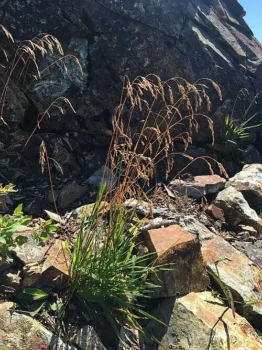
Mountain Hairgrass: A Hardy Arctic Beauty for Cold Climate Gardens
If you’re gardening in one of North America’s coldest regions and looking for a tough, native grass that can handle whatever winter throws at it, mountain hairgrass might just be your new best friend. This unassuming little perennial grass has mastered the art of surviving in some pretty extreme conditions – and it might be exactly what your alpine garden needs.
What is Mountain Hairgrass?
Mountain hairgrass (Vahlodea atropurpurea) is a perennial graminoid – that’s garden-speak for a grass-like plant. Don’t let its delicate appearance fool you; this little survivor is tougher than it looks. You might also see it listed under various scientific synonyms in plant catalogs, including Deschampsia atropurpurea, but they’re all referring to the same hardy grass.
True to its name, this grass develops beautiful purplish-tinged flower heads that add a subtle splash of color to otherwise green landscapes. The fine-textured foliage creates soft, tufted clumps that sway gently in mountain breezes.
Where Does Mountain Hairgrass Come From?
This grass is a true North American native, calling home to some pretty impressive places. You’ll find it naturally growing across Alaska, throughout much of Canada (including Alberta, British Columbia, Manitoba, Ontario, Quebec, Yukon, Northwest Territories, and Nunavut), and extending down into several northern U.S. states including California, Colorado, Idaho, Maine, Montana, New Hampshire, New York, Oregon, Vermont, Washington, and Wyoming.
- Species observed
- No observations
Should You Plant Mountain Hairgrass in Your Garden?
Here’s the honest truth: mountain hairgrass isn’t for everyone. This plant has some very specific requirements that make it a specialized choice rather than an everyday garden staple.
The Good News
- Extremely cold hardy (thrives in USDA zones 1-4)
- Native plant that supports local ecosystems
- Excellent for erosion control in harsh climates
- Low maintenance once established in suitable conditions
- Adds texture and subtle color to alpine landscapes
The Reality Check
- Requires very cold winters to thrive
- Not suitable for warm or temperate climates
- Can be challenging to establish outside its native range
- Limited availability in typical garden centers
- Offers minimal direct benefits to pollinators (it’s wind-pollinated)
Where Mountain Hairgrass Shines
If you’re working with an alpine garden, rock garden, or naturalized area in a very cold climate, mountain hairgrass could be a fantastic addition. It’s particularly valuable for:
- Creating authentic native plant landscapes in northern regions
- Stabilizing soil on slopes in cold, harsh conditions
- Adding fine texture to contrast with broader-leaved alpine plants
- Filling in spaces in rock gardens where few other plants will grow
Growing Conditions and Care
Mountain hairgrass has earned its place in some of North America’s most challenging environments, so replicating those conditions is key to success.
What It Needs
- Climate: Very cold winters and cool summers (zones 1-4)
- Light: Full sun to partial shade
- Soil: Moist, well-draining soil; acidic to neutral pH preferred
- Water: Consistent moisture (it has facultative wetland status, meaning it usually grows in wet areas but can tolerate drier spots)
Planting and Care Tips
- Start with seed or small plants from specialized native plant nurseries
- Plant in spring after the last hard frost
- Keep soil consistently moist but not waterlogged
- Mulch lightly to help retain moisture
- Be patient – establishment can be slow
- Minimal fertilization needed; too much nutrition can actually harm cold-adapted plants
The Bottom Line
Mountain hairgrass is definitely a niche plant, but if you’re gardening in its preferred climate zones, it can be a valuable addition to your landscape. It’s particularly worth considering if you’re passionate about native plants or working on restoration projects in northern regions.
Just remember: this isn’t a plant you can force to work in inappropriate climates. If you’re gardening in zones 5 and warmer, you’ll be much happier (and more successful) choosing warm-season grasses better suited to your area.
For those lucky enough to garden where mountain hairgrass naturally thrives, you’ll find it’s a tough, reliable performer that brings a piece of the wild northern landscape right to your backyard.