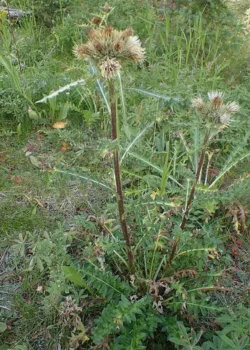
Mountain Slope Thistle: A Rare Colorado Native Worth Protecting
If you’re a Colorado gardener looking to support native biodiversity while adding unique texture to your landscape, mountain slope thistle (Cirsium scapanolepis) might just be the perfect addition to your garden. This remarkable native perennial represents one of Colorado’s botanical treasures – a thistle that’s both beautiful and ecologically important, though increasingly rare in the wild.
What Makes Mountain Slope Thistle Special?
Mountain slope thistle is a Colorado endemic, meaning it grows naturally nowhere else in the world. This perennial forb belongs to the sunflower family and showcases the classic thistle appearance we’ve come to recognize: spiny leaves, sturdy stems, and gorgeous purple-pink flower heads that practically buzz with pollinator activity during bloom time.
Unlike some of its more aggressive cousins, this native thistle plays by the rules in the garden. It’s a well-behaved perennial that won’t take over your landscape, making it an excellent choice for gardeners who want the wildlife benefits of thistles without the invasive headaches.
Where Does It Call Home?
This special thistle is found exclusively in Colorado, where it has adapted to the state’s unique high-elevation environments. Its limited geographic range makes it a true Colorado original – a living piece of the state’s natural heritage that you can cultivate in your own backyard.
- Species observed
- No observations
A Word About Rarity
Here’s something important to know: mountain slope thistle has a conservation status that suggests it’s quite rare in the wild. If you’re interested in growing this native beauty, please make sure you source your plants or seeds from reputable native plant nurseries that propagate their stock rather than collecting from wild populations. This ensures we’re helping this species thrive rather than putting additional pressure on natural populations.
Garden Appeal and Design Role
Mountain slope thistle brings several design elements to your landscape:
- Architectural form with its upright growth habit and distinctive spiny foliage
- Eye-catching purple-pink flowers that bloom in summer
- Textural contrast that pairs beautifully with grasses and other native perennials
- Four-season interest, with dried seed heads adding winter structure
This thistle works particularly well in naturalistic plantings, rock gardens, and xeriscaped areas where its drought tolerance and unique form can shine. It’s also perfect for wildlife gardens, where its pollinator appeal makes it a true garden workhorse.
Perfect Growing Conditions
Mountain slope thistle thrives in conditions that mirror its natural Colorado habitat:
- Sunlight: Full sun is essential for best growth and flowering
- Soil: Well-draining soils are crucial – this plant hates wet feet
- Water: Drought tolerant once established, requiring minimal supplemental watering
- Hardiness: Suitable for USDA zones 4-7, perfect for Colorado’s climate
Pollinator and Wildlife Benefits
Here’s where mountain slope thistle really earns its keep in the garden. The nectar-rich flowers are magnets for:
- Native bees of various sizes
- Butterflies, including some specialist species
- Beneficial insects that help with garden pest control
- Birds that feed on the seeds later in the season
By planting this native thistle, you’re essentially creating a pollinator buffet that supports Colorado’s native ecosystem right in your backyard.
Planting and Care Tips
Growing mountain slope thistle successfully is surprisingly straightforward:
- Timing: Fall seeding often works best, allowing natural stratification over winter
- Soil prep: Ensure excellent drainage – consider raised beds or slopes if your soil is heavy
- Spacing: Give plants room to develop their natural form
- Maintenance: Minimal care required once established – avoid overwatering and over-fertilizing
- Propagation: Can be grown from seed, though germination may be variable
Should You Grow Mountain Slope Thistle?
If you’re a Colorado gardener passionate about native plants and supporting local biodiversity, mountain slope thistle deserves consideration. Its rarity makes it a special addition that connects your garden to Colorado’s unique natural heritage. The key is sourcing responsibly and understanding that you’re not just growing a plant – you’re helping preserve a piece of Colorado’s botanical legacy.
Just remember: with rare plants comes responsibility. Choose reputable sources, never collect from the wild, and consider yourself a steward of this remarkable Colorado endemic. Your garden – and Colorado’s native pollinators – will thank you for it.