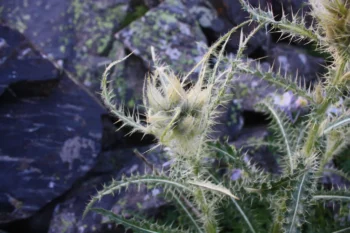
Mountain Thistle: A Rocky Mountain Native Worth Growing
If you’re looking to add some wild beauty to your garden while supporting local pollinators, mountain thistle (Cirsium scopulorum) might just be the perfect addition to your landscape. This spiky-but-stunning native brings authentic Rocky Mountain charm to gardens across the American West.
What Is Mountain Thistle?
Mountain thistle is a biennial forb native to the western United States, specifically thriving in Colorado, New Mexico, Utah, and Wyoming. As a biennial, this plant follows a two-year lifecycle—spending its first year developing a rosette of leaves and its second year producing those eye-catching purple-pink flowers that make it such a garden standout.
Don’t let the name thistle scare you off! While this plant does have the characteristic spiny leaves of its thistle relatives, it’s a well-behaved native that won’t take over your garden like some of its more aggressive cousins.
- Species observed
- No observations
Why Choose Mountain Thistle for Your Garden?
There are several compelling reasons to consider adding mountain thistle to your landscape:
- Pollinator magnet: The vibrant purple-pink flowers are irresistible to bees, butterflies, and other beneficial insects
- Low maintenance: Once established, this drought-tolerant native requires minimal care
- Authentic regional beauty: Perfect for creating naturalized areas that reflect the true character of the Rocky Mountain region
- Wildlife value: Beyond pollinators, the seeds provide food for birds
- Architectural interest: The silvery-green, spiny foliage adds unique texture to garden compositions
Where Does Mountain Thistle Fit in Your Landscape?
Mountain thistle works beautifully in several garden settings:
- Native plant gardens: Pairs wonderfully with other Rocky Mountain natives
- Xeriscape designs: Its drought tolerance makes it perfect for water-wise landscaping
- Rock gardens: Thrives in the well-drained conditions that rocky slopes provide
- Wildflower meadows: Adds height and structure to naturalized plantings
- Pollinator gardens: An essential component of any bee and butterfly-friendly space
Growing Conditions and Care
Mountain thistle is refreshingly easy to grow when you match its natural preferences:
Sunlight: Full sun is essential for the best flowering and strongest growth.
Soil: Well-drained soil is crucial. This plant won’t tolerate soggy conditions, making it perfect for slopes, raised beds, or naturally sandy soils.
Water: Drought tolerant once established, though young plants appreciate occasional watering their first season.
Climate: Hardy in USDA zones 4-7, making it suitable for most Rocky Mountain and high plains gardens.
Planting and Propagation Tips
Getting started with mountain thistle is straightforward:
- Seeds: Direct sow seeds in fall or early spring. The plant self-seeds readily once established
- Timing: Plant in spring after the last frost, or in fall before winter sets in
- Spacing: Allow 12-18 inches between plants to accommodate their mature size
- Patience: Remember, as a biennial, you won’t see flowers until the second year
A Word About Conservation
Mountain thistle has a conservation status that suggests it may be uncommon in some areas. If you’re interested in growing this native beauty, make sure to source seeds or plants from reputable native plant nurseries that collect responsibly. This helps ensure wild populations remain undisturbed while allowing you to enjoy this special plant in your garden.
Is Mountain Thistle Right for Your Garden?
Mountain thistle is an excellent choice if you want to create authentic regional landscapes, support pollinators, and enjoy low-maintenance gardening. It’s particularly perfect for gardeners in the Rocky Mountain region who want to showcase their area’s natural heritage.
However, it might not be the best fit if you prefer highly manicured gardens or have very limited space, as the spiny foliage requires respectful placement away from high-traffic areas.
With its combination of ecological benefits, striking appearance, and easy care requirements, mountain thistle deserves serious consideration for Western gardens looking to embrace their native plant heritage.