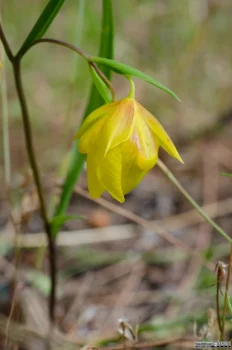
Mt. Diablo Fairy-Lantern: A Rare California Treasure for Your Native Garden
If you’re looking to add something truly special to your California native garden, the Mt. Diablo fairy-lantern might just be the enchanting bulb you’ve been searching for. This delicate perennial herb creates magic in the landscape with its nodding, bell-shaped flowers that seem to glow like tiny lanterns in spring woodlands.
What Makes This Plant Special
The Mt. Diablo fairy-lantern (Calochortus pulchellus) is a native California bulb that produces some of the most charming flowers you’ll ever see. In late spring, elegant stems rise from the ground topped with drooping, bell-shaped blooms in white to pale pink, often decorated with subtle purple markings. The flowers have a delicate, almost translucent quality that gives them their fairy-lantern nickname.
As a member of the lily family, this perennial forb grows from underground bulbs and follows the classic Mediterranean pattern of spring growth and summer dormancy. The plant typically reaches 1-2 feet in height when in bloom, with slender stems and grass-like foliage.
Where It Calls Home
This special plant is endemic to California, with most populations concentrated in the San Francisco Bay Area, particularly around Mt. Diablo and the surrounding foothills. You’ll find it naturally growing in oak woodlands, grasslands, and chaparral communities at elevations between 500-3,000 feet.
- Species observed
- No observations
Important Conservation Note
Here’s something every gardener should know: the Mt. Diablo fairy-lantern has a Global Conservation Status of S2, meaning it’s considered imperiled due to extreme rarity. With typically only 6-20 known occurrences and an estimated 1,000-3,000 individuals remaining in the wild, this is truly a rare treasure. If you choose to grow this plant, it’s absolutely essential to source bulbs only from reputable native plant nurseries that propagate their own stock rather than collecting from wild populations.
Why Grow Mt. Diablo Fairy-Lantern
Despite its rarity (or perhaps because of it), there are compelling reasons to include this plant in your garden:
- Supports native biodiversity and conservation efforts
- Attracts native bees and other small pollinators during its spring bloom
- Perfect for rock gardens, native plant collections, and naturalistic landscapes
- Requires minimal water once established, making it drought-tolerant
- Adds unique texture and seasonal interest to Mediterranean-style gardens
- Conversation starter due to its rarity and beauty
Growing Conditions and Care
Mt. Diablo fairy-lantern thrives in USDA hardiness zones 8-10, making it suitable for most of California’s Mediterranean climate regions. Here’s what this special bulb needs to flourish:
Soil and Drainage
Excellent drainage is absolutely critical. Plant bulbs in well-draining soil, ideally on a slope or in raised beds. Heavy clay soils should be amended with sand and organic matter, or consider growing in containers with a Mediterranean bulb mix.
Light Requirements
Provide partial shade to dappled sunlight, similar to its natural oak woodland habitat. Morning sun with afternoon shade works particularly well.
Water Needs
Follow the plant’s natural cycle: provide moderate water during active growth in winter and spring, then allow the soil to dry out completely during summer dormancy. Overwatering during dormancy is one of the fastest ways to lose these bulbs.
Planting and Care Tips
- Plant bulbs in fall, 3-4 inches deep and 4-6 inches apart
- Mark planting locations, as the bulbs disappear completely during summer dormancy
- Avoid disturbing the soil around dormant bulbs
- Allow foliage to die back naturally after blooming to feed the bulb
- Protect from gophers and other rodents with wire baskets if necessary
- Be patient – bulbs may take 2-3 years to become established and bloom reliably
Garden Design Ideas
The Mt. Diablo fairy-lantern works beautifully in several garden settings:
- Rock gardens with other California native bulbs
- Under native oaks in naturalistic plantings
- Mediterranean-style gardens with other drought-tolerant perennials
- Containers for close-up appreciation of the delicate flowers
- Native plant collections and botanical gardens
The Bottom Line
While the Mt. Diablo fairy-lantern requires specific growing conditions and responsibly sourced bulbs, it’s a worthwhile addition for gardeners committed to native plant conservation. Its ethereal beauty, pollinator value, and drought tolerance make it a special choice for the right garden situation. Just remember: only purchase from reputable sources that propagate their own plants, never collect from the wild, and be prepared to provide the Mediterranean growing conditions this rare beauty needs to thrive.
Growing rare native plants like the Mt. Diablo fairy-lantern is ultimately about more than just garden beauty – it’s about participating in conservation and keeping California’s botanical heritage alive for future generations.