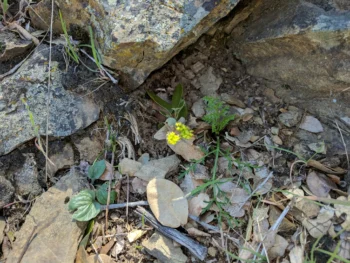
Mt. Hamilton Desertparsley: A Critically Endangered California Native
If you’re exploring California’s native plants, you might come across the intriguing Mt. Hamilton desertparsley (Lomatium observatorium). But before you get excited about adding this unique species to your garden, there’s something crucial you need to know about this remarkable little plant.
What Makes Mt. Hamilton Desertparsley Special
Mt. Hamilton desertparsley is a perennial forb—essentially a non-woody plant that comes back year after year. Like other members of the carrot family, it likely produces delicate, umbrella-shaped flower clusters that are both beautiful and ecologically important. This California native represents millions of years of evolution specifically adapted to its unique mountain environment.
Where Does It Call Home?
This rare gem is found exclusively in California, making it a true Golden State endemic. Its very name gives away its primary location—the Mt. Hamilton area, where it has carved out its ecological niche in what are likely dry, rocky conditions typical of California’s interior mountains.
- Species observed
- No observations
The Critical Conservation Status
Here’s where things get serious: Mt. Hamilton desertparsley has a Global Conservation Status of S1, meaning it’s critically imperiled. This classification indicates there are typically five or fewer known populations, or fewer than 1,000 individual plants remaining in the wild. That makes this species rarer than many animals we consider endangered!
What does this mean for gardeners? Simply put, this isn’t a plant you should be looking to grow in your backyard.
Why You Shouldn’t Plant Mt. Hamilton Desertparsley
While the urge to cultivate rare natives is understandable, there are several important reasons to admire this species from afar:
- Any removal from wild populations could further threaten the species’ survival
- Seeds or plants are not commercially available through responsible sources
- The species likely has very specific habitat requirements that are difficult to replicate
- Conservation efforts should focus on protecting existing populations rather than cultivation
What You Can Do Instead
If you’re inspired by Mt. Hamilton desertparsley and want to support California’s native plant diversity, consider these alternatives:
- Plant other, more common Lomatium species that provide similar ecological benefits
- Support local conservation organizations working to protect rare plant habitats
- Choose other California native forbs that support pollinators and local ecosystems
- Participate in citizen science projects that help monitor rare plant populations
The Bigger Picture
Mt. Hamilton desertparsley serves as a reminder of California’s incredible botanical diversity and the fragility of specialized ecosystems. While we can’t grow this particular species in our gardens, we can honor its existence by making thoughtful choices about the plants we do cultivate.
By choosing locally appropriate native plants that aren’t at risk, we can create gardens that support biodiversity while leaving the rarest species safely in their natural habitats. Sometimes the best way to love a plant is to let it be wild.
Learning More
If you’re fascinated by rare California natives, consider connecting with local native plant societies, botanical gardens, or conservation groups. They often organize field trips and educational programs that let you appreciate species like Mt. Hamilton desertparsley in their natural settings—which is exactly where they belong.