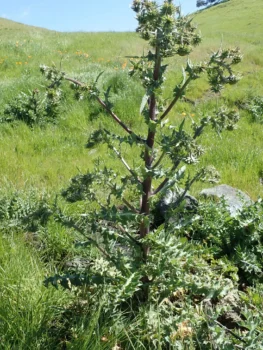
Mt. Hamilton Thistle: A Rare California Native Worth Protecting
If you’re passionate about native plants and conservation, the Mt. Hamilton thistle (Cirsium fontinale var. campylon) might just capture your heart. This distinctive California native isn’t your average garden thistle – it’s a rare perennial that plays a crucial role in supporting local ecosystems while adding unique beauty to specialized landscapes.
What Makes Mt. Hamilton Thistle Special?
The Mt. Hamilton thistle is a herbaceous perennial forb, meaning it’s a non-woody plant that comes back year after year. As a member of the thistle family, it produces the characteristic spiny stems and leaves, but don’t let that deter you – its purple-pink blooms are genuinely striking and serve as magnets for pollinators.
This plant is exclusively native to California, making it a true Golden State original. Its limited distribution means you’re growing something truly special when you choose this thistle for your garden.
- Species observed
- No observations
Important Conservation Note
Here’s where things get serious: Mt. Hamilton thistle has a rarity status of S2T2, which indicates it’s quite rare in the wild. If you’re considering adding this plant to your garden, please ensure you source it responsibly from reputable native plant nurseries or seed suppliers who collect ethically. Never harvest from wild populations – every plant in nature counts for this species’ survival.
Why Grow Mt. Hamilton Thistle?
Despite its spiny appearance, this thistle offers several compelling benefits:
- Exceptional pollinator magnet – butterflies, bees, and other beneficial insects love the nectar-rich flowers
- Low-maintenance once established
- Drought-tolerant, perfect for water-wise gardens
- Supports local ecosystem and native wildlife
- Adds unique texture and wild beauty to native plant gardens
Perfect Garden Settings
Mt. Hamilton thistle shines in specific garden types:
- Native plant gardens focused on California flora
- Wildlife habitat and pollinator gardens
- Restoration projects in appropriate regions
- Mediterranean-style drought-tolerant landscapes
- Educational gardens showcasing rare native species
Growing Conditions and Care
This thistle thrives in USDA hardiness zones 8-10, making it suitable for most of California’s climate zones. Here’s what it needs to flourish:
- Full sun exposure
- Well-draining soil – avoid areas that stay soggy
- Minimal water once established (drought-tolerant)
- Mediterranean climate conditions
- Space to spread as a perennial forb
Planting and Care Tips
Success with Mt. Hamilton thistle comes down to mimicking its natural habitat:
- Plant in fall or early spring for best establishment
- Ensure excellent drainage – amend heavy clay soils if needed
- Water regularly during the first growing season, then reduce significantly
- Avoid fertilizing – native plants prefer lean soils
- Allow the plant to self-seed if you want natural propagation
- Cut back spent flowers if you prefer a tidier appearance
The Bottom Line
Mt. Hamilton thistle isn’t for every garden or every gardener. Its rarity means it requires responsible sourcing, and its spiny nature might not suit formal landscapes. However, if you’re committed to native plant conservation and want to support local pollinators while growing something truly unique, this California endemic could be a rewarding addition to your garden.
Remember: by growing rare natives like Mt. Hamilton thistle, you’re not just beautifying your space – you’re participating in conservation efforts and helping preserve California’s botanical heritage for future generations.