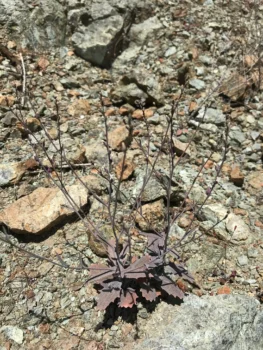
Mt. Tamalpais Jewelflower: A Critically Endangered California Treasure
If you’re passionate about California’s native flora, you’ve probably never heard of Mt. Tamalpais jewelflower (Streptanthus batrachopus) – and there’s a very good reason for that. This tiny annual wildflower is one of California’s rarest botanical treasures, so endangered that it exists in only a handful of locations around Mount Tamalpais in Marin County.
What Makes This Plant So Special?
Mt. Tamalpais jewelflower is a delicate annual forb – that’s botanist-speak for a soft-stemmed flowering plant that completes its entire life cycle in one year. Like other members of the jewelflower family, it produces small, typically yellow flowers that may seem modest at first glance, but represent millions of years of evolution perfectly adapted to California’s unique serpentine soils.
Where Does It Call Home?
This rare beauty is found exclusively in California, specifically in the Mount Tamalpais area of Marin County. Its distribution is so limited that botanists have given it a Global Conservation Status of S1, meaning it’s critically imperiled with typically fewer than 5 occurrences and fewer than 1,000 individual plants remaining in the wild.
- Species observed
- No observations
A Plant You Shouldn’t (and Probably Can’t) Grow
Here’s where we need to have a serious conversation. Unlike most plants we feature on this blog, Mt. Tamalpais jewelflower is absolutely not something you should try to grow in your garden. Here’s why:
- Critical rarity: With so few plants left in the wild, every individual is precious for the species’ survival
- Specialized habitat: It requires very specific serpentine soil conditions that are nearly impossible to replicate
- Conservation priority: Efforts should focus on protecting existing populations, not cultivation
- Likely unavailable: Responsible nurseries won’t sell critically endangered species
What We Do Know About Its Needs
While we don’t recommend growing this species, understanding its natural habitat helps us appreciate what makes it special. Mt. Tamalpais jewelflower thrives in the unique serpentine soils found on and around Mount Tamalpais, likely in chaparral and grassland edge communities. As a California native, it’s adapted to the state’s Mediterranean climate with wet winters and dry summers, probably suited to USDA zones 9-10.
Supporting Pollinators the Right Way
If you’re drawn to jewelflowers because you want to support native pollinators, there are much better alternatives! Consider these more common California natives that provide similar benefits without conservation concerns:
- Common jewelflower (Streptanthus glandulosus) – more widely distributed
- California mustard (Brassica nigra) – though non-native, widely naturalized
- Other native Brassica family members that support similar pollinators
How You Can Help
Instead of trying to grow Mt. Tamalpais jewelflower, here’s how you can support this endangered species:
- Support organizations working to protect Mount Tamalpais habitat
- Practice Leave No Trace principles when hiking in the area
- Choose common native plants that support the same pollinators
- Spread awareness about California’s rare plant conservation needs
Sometimes the best way to love a plant is to admire it from afar and ensure it has a safe place to continue its ancient dance with the California landscape. Mt. Tamalpais jewelflower reminds us that not every beautiful native belongs in our gardens – some are meant to remain wild, rare, and wonderful in their natural homes.