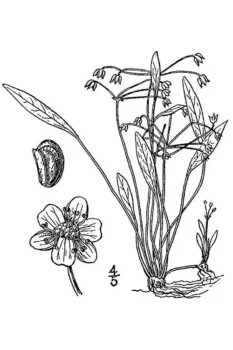
Mudbabies: The Tiny Native Groundcover Perfect for Wet Spots
If you’ve got a perpetually soggy spot in your yard that makes you scratch your head in frustration, let me introduce you to a charming little native plant that actually loves getting its feet wet. Meet mudbabies (Echinodorus tenellus), a delightfully named perennial that might just be the perfect solution for your wetland woes.
What Exactly Are Mudbabies?
Don’t let the quirky name fool you – mudbabies are a legitimate native plant species that belongs to the water plantain family. This petite perennial is technically classified as a forb, which simply means it’s a soft-stemmed plant without woody tissue. Think of it as nature’s version of ornamental grass, but one that’s perfectly adapted to life in consistently wet conditions.
You might also encounter this plant under its various botanical synonyms, including Helianthium tenellum or Echinodorus parvulus, but mudbabies is certainly the most memorable moniker.
Where Do Mudbabies Call Home?
This native beauty has quite an impressive range across the United States. You’ll find mudbabies naturally growing in 23 states, stretching from the Great Lakes region down to the Gulf Coast, and even in Puerto Rico. Specifically, they thrive in Alabama, Arkansas, Connecticut, Delaware, Florida, Georgia, Illinois, Indiana, Kansas, Kentucky, Louisiana, Massachusetts, Michigan, Mississippi, Missouri, New Jersey, New York, North Carolina, Oklahoma, South Carolina, Texas, and Virginia.
- Species observed
- No observations
A Word About Rarity
Before you rush out to plant mudbabies everywhere, there’s something important to know. This species has some conservation concerns in certain areas. In Alabama, it’s considered quite rare with an S1 status, and in New Jersey, it’s listed with special concern status. If you live in these areas and want to grow mudbabies, please make sure you source your plants responsibly from reputable native plant nurseries rather than collecting from wild populations.
Why Your Garden Will Love Mudbabies
Mudbabies shine brightest when used as a groundcover in challenging wet areas where other plants might struggle or rot. Here’s what makes them garden-worthy:
- Problem solver: Perfect for rain gardens, pond margins, and those chronically wet spots
- Low maintenance: Once established, they pretty much take care of themselves
- Native benefits: Supports local ecosystems and wildlife
- Unique texture: Adds fine-textured, grass-like foliage to wetland plantings
Growing Mudbabies Successfully
The secret to success with mudbabies is understanding their one non-negotiable requirement: they absolutely must have consistently moist to wet soil. In fact, they’re classified as obligate wetland plants across all regions where they grow, meaning they almost always occur in wetlands.
Ideal Growing Conditions
- Light: Full sun to partial shade
- Soil: Consistently moist to saturated, can handle periodic flooding
- Hardiness: USDA zones 4-9
- Water: Loves wet feet – perfect for bog gardens or pond edges
Planting and Care Tips
Spring is the ideal time to plant mudbabies. Choose a spot that stays consistently moist or wet year-round – think of areas that might puddle after rain or stay soggy longer than other parts of your yard. The beauty of this plant is that once it’s established in the right conditions, it requires minimal care.
Keep in mind that mudbabies spread naturally to form colonies, creating that coveted groundcover effect. They’re not aggressive spreaders, so you don’t need to worry about them taking over your entire garden.
The Pollinator Picture
While mudbabies do produce small flowers, they’re not the showiest bloomers in the garden. Their pollinator benefits are modest compared to flashier native wildflowers, but every native plant plays a role in supporting local ecosystems.
Is This Plant Right for Your Garden?
Mudbabies are perfect for gardeners who:
- Have consistently wet or boggy areas in their landscape
- Want to create authentic wetland habitats
- Appreciate subtle, fine-textured plants over bold statement makers
- Value native species and ecological gardening
However, if your garden tends toward the dry side or you’re looking for dramatic visual impact, mudbabies might not be your best choice. They’re specialists that excel in specific conditions rather than versatile performers.
Remember, if you’re in Alabama or New Jersey, be extra thoughtful about sourcing to protect wild populations. When grown in the right conditions by responsible gardeners, mudbabies can be a wonderful addition to wetland-themed landscapes, proving that sometimes the best solutions to gardening challenges come in small, unassuming packages.