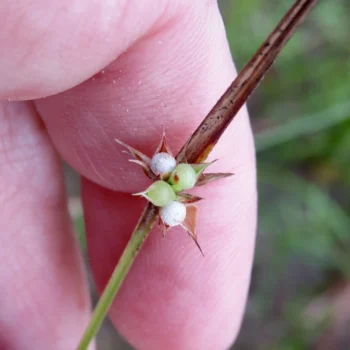
Muehlenberg’s Nutrush: A Specialized Native Sedge for Wet Gardens
If you’re looking to add authentic native character to your wetland garden or rain garden, Muehlenberg’s nutrush (Scleria muehlenbergii) might just be the understated specialist you need. This native sedge brings quiet elegance to wet spaces, though it’s definitely not your typical garden center find.
What is Muehlenberg’s Nutrush?
Muehlenberg’s nutrush is a native sedge that belongs to the diverse family of grass-like plants. Don’t let the name fool you – it’s actually a member of the sedge family (Cyperaceae), not a true rush. This plant can behave as either an annual or perennial, adapting its life cycle to local conditions.
Like many sedges, Muehlenberg’s nutrush won’t win any flashy flower contests. Its small, brownish flower clusters are designed for wind pollination rather than showy display. But what it lacks in pizzazz, it makes up for in ecological authenticity and specialized habitat value.
Where Does It Call Home?
This native sedge has quite an impressive range across the eastern United States. You’ll find it growing naturally from New York down to Florida and west to Texas, with populations scattered across 22 states plus Puerto Rico. It thrives in states like Alabama, Delaware, Florida, Georgia, Illinois, Kentucky, Louisiana, Maryland, North Carolina, South Carolina, Tennessee, Virginia, and many others.
- Species observed
- No observations
A Plant That Really Knows Its Place
Here’s where Muehlenberg’s nutrush gets interesting – it’s incredibly specific about where it wants to live. This plant is what we call an obligate wetland species in most regions, meaning it almost always occurs in wetlands. However, in some areas like the Eastern Mountains and Piedmont, it can tolerate drier conditions.
The wetland status varies by region:
- Atlantic and Gulf Coastal Plain: Obligate wetland
- Great Plains: Obligate wetland
- Eastern Mountains and Piedmont: Facultative (wet and dry areas)
- Midwest: Facultative (wet and dry areas)
- Northeast: Facultative wetland (usually wet areas)
Should You Grow Muehlenberg’s Nutrush?
The honest answer? Only if you have the right conditions and a serious commitment to native plant gardening. This isn’t a beginner-friendly plant, and it’s not going to work in your average perennial border.
Consider growing it if you have:
- A rain garden or bioswale
- Pond or stream margins
- Natural wet areas on your property
- A wetland restoration project
- A serious interest in supporting local ecosystems
Important Rarity Considerations
Before you get too excited, there’s something important to know: Muehlenberg’s nutrush has a rarity status of S1S2 in Arkansas, meaning it’s critically imperiled to imperiled in that state. If you’re interested in growing this plant, make absolutely sure you source it responsibly from reputable native plant nurseries that propagate their own stock rather than wild-collecting.
Growing Conditions and Care
If you’ve got the right wet spot and responsibly sourced plants, here’s what Muehlenberg’s nutrush needs to thrive:
Growing Conditions:
- Consistently moist to wet soil
- Full sun to partial shade
- USDA hardiness zones 6-10 (based on natural range)
- Tolerates seasonal flooding
- Prefers rich, organic wetland soils
Care Tips:
- Once established, it’s quite low-maintenance
- Don’t let it dry out – consistent moisture is key
- No fertilizing needed in appropriate wet soils
- Allow it to go through natural cycles if it behaves as an annual
The Bottom Line
Muehlenberg’s nutrush is definitely a plant for the native plant enthusiast rather than the casual gardener. It won’t provide showy blooms or dramatic foliage, but it will give you the satisfaction of growing a truly authentic piece of your local ecosystem. If you have wet conditions and want to support native biodiversity in a quiet, understated way, this sedge might be worth seeking out – just remember to source it responsibly and be patient with its specialized needs.
For most gardeners interested in native wetland plants, you might also consider more readily available alternatives like native rushes, blue flag iris, or cardinal flower, depending on your specific conditions and aesthetic preferences.