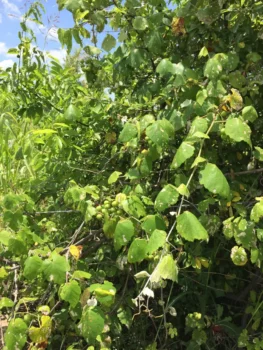
Mustang Grape: A Wild and Wonderful Native Vine for Your Garden
If you’re looking for a native vine that combines rugged beauty with practical benefits, meet the mustang grape (Vitis mustangensis). This vigorous climbing vine brings a touch of the wild frontier to modern landscapes while supporting local wildlife and providing you with edible rewards.
What is Mustang Grape?
Mustang grape is a perennial climbing vine native to the south-central United States. Also known by its botanical name Vitis mustangensis, this hardy plant has been scrambling up trees and covering rocky outcrops across Texas, Oklahoma, Arkansas, Louisiana, and Alabama for centuries. Like a botanical cowboy, it’s tough, independent, and ready to take on whatever nature throws its way.
Where Does Mustang Grape Grow?
This native vine calls the south-central United States home, thriving in Alabama, Arkansas, Louisiana, Oklahoma, and Texas. However, it’s worth noting that mustang grape has a critically imperiled (S1) conservation status in Alabama, making it quite rare in that state.
- Species observed
- No observations
Why Plant Mustang Grape in Your Garden?
There are plenty of reasons to welcome this native vine into your landscape:
- Wildlife magnet: The flowers attract bees and other pollinators in late spring, while birds love the small, dark purple grapes
- Edible rewards: You can harvest the grapes for jams, jellies, or even wine (though they’re quite tart!)
- Stunning fall color: The large, heart-shaped leaves turn brilliant yellow in autumn
- Natural screening: Perfect for covering unsightly fences, walls, or creating privacy screens
- Low maintenance: Once established, it’s remarkably drought tolerant and needs minimal care
- Native plant benefits: Supports local ecosystems and requires less water than non-native alternatives
Important Conservation Note
If you’re in Alabama, please be aware that mustang grape is considered critically imperiled (S1 status) in your state. While we encourage planting native species, please only source plants from reputable native plant nurseries that use responsibly collected seeds or ethically propagated materials. Never collect plants or seeds from wild populations.
Garden Design and Landscape Role
Mustang grape shines in several landscape applications:
- Wildlife gardens: Essential for supporting native pollinators and birds
- Edible landscapes: Combines beauty with functionality
- Large properties: Excellent for naturalizing areas or covering large structures
- Pergolas and arbors: Creates beautiful living canopies
- Privacy screening: Dense growth provides excellent coverage
Growing Conditions and Care
Mustang grape is refreshingly easy to please once you understand its preferences:
Light Requirements: Thrives in full sun to partial shade, though full sun produces the best fruit
Soil Needs: Adaptable to various well-drained soils; avoid constantly wet conditions
Water Requirements: Drought tolerant once established, but benefits from occasional deep watering during dry spells
USDA Hardiness Zones: Hardy in zones 6-9, making it suitable for most of its native range
Planting and Care Tips
Getting your mustang grape off to a strong start is straightforward:
- Timing: Plant in spring after the last frost date
- Support structure: Provide sturdy support like a trellis, fence, or arbor – this vine means business and can get quite heavy
- Spacing: Give it plenty of room – mature vines can spread 15-20 feet or more
- Initial care: Water regularly the first year to establish roots
- Pruning: Minimal pruning needed; trim in late winter if necessary for size control
- Fertilizing: Generally unnecessary in decent soil; these vines are naturally vigorous
Potential Considerations
While mustang grape is generally well-behaved, keep these points in mind:
- Vigorous growth: This vine grows enthusiastically, so ensure you have adequate space and support
- Grape quality: The fruits are quite tart and better suited for processing than fresh eating
- Size at maturity: Can reach 20+ feet in length with proper support
The Bottom Line
Mustang grape offers gardeners a perfect blend of native plant benefits, wildlife support, and practical functionality. Its vigorous growth, attractive foliage, and edible fruits make it an excellent choice for larger landscapes where you want to create natural-looking coverage or support local wildlife. Just remember to source your plants responsibly, especially if you’re in Alabama, and provide sturdy support for this enthusiastic climber.
Whether you’re creating a wildlife haven, establishing an edible landscape, or simply want a low-maintenance vine that connects you to your region’s natural heritage, mustang grape delivers wild beauty with frontier toughness.