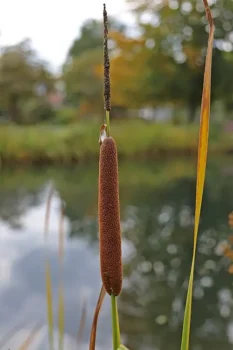
Narrowleaf Cattail: A Wetland Plant That Requires Careful Consideration
If you’ve ever wandered near a pond or wetland area, you’ve likely spotted those iconic brown, sausage-shaped flower spikes swaying in the breeze. Meet the narrowleaf cattail (Typha angustifolia), a perennial wetland plant that’s both beloved for its distinctive appearance and approached with caution due to its aggressive spreading habits.
What Makes Narrowleaf Cattail Special?
Narrowleaf cattail is exactly what its name suggests – a cattail with narrower leaves than its more common cousin, the broad-leaved cattail. This tall, grass-like perennial can reach nearly 5 feet in height, creating dramatic vertical lines in wetland landscapes. Its most recognizable feature is the distinctive brown cylindrical flower spike that appears in late spring, followed by fluffy white seeds that disperse on the wind.
The plant grows rapidly through underground rhizomes, forming dense colonies that can completely transform a wetland area in just a few growing seasons. Its coarse-textured, green foliage provides a bold architectural element, while the conspicuous flowers add seasonal interest.
Native Status and Geographic Distribution
Here’s where things get a bit complicated. Narrowleaf cattail is native to Canada, but its native status in the lower 48 United States is undefined – meaning botanists aren’t entirely sure whether it originally belonged here or was introduced. What we do know is that it now grows extensively across North America, from British Columbia to Nova Scotia in Canada, and throughout most U.S. states from coast to coast.
- Species observed
- No observations
A Word of Caution: Invasive Tendencies
Before you get excited about adding this dramatic plant to your water garden, there’s an important caveat: narrowleaf cattail has earned a Restricted invasive status in Wisconsin, and its aggressive spreading nature can cause problems in many regions. This plant doesn’t just grow – it conquers. Its rapid vegetative spread can quickly overtake native wetland species and alter entire ecosystems.
If you’re considering narrowleaf cattail for your landscape, think carefully about whether you can contain its spread and whether there might be better native alternatives for your region.
Growing Conditions and Care
If you do decide to grow narrowleaf cattail (with proper precautions), here’s what it needs:
- Water requirements: This is an obligate wetland plant, meaning it almost always occurs in wetlands and requires consistently wet to waterlogged conditions
- Sunlight: Full sun – it’s intolerant of shade
- Soil: Adapts to coarse, medium, or fine-textured soils as long as they stay wet
- pH tolerance: Remarkably adaptable, tolerating pH levels from 3.7 to 8.5
- Hardiness: Extremely cold-hardy, tolerating temperatures as low as -33°F
- Moisture: High water use – think soggy, not just moist
Landscape Role and Design Applications
When appropriately contained, narrowleaf cattail can serve several landscape functions:
- Dramatic vertical accent in water features
- Natural screening for privacy (though it dies back in winter)
- Erosion control along water edges
- Wildlife habitat in constructed wetlands
- Rain garden plantings in consistently wet areas
This plant works best in large-scale naturalized wetlands, constructed ponds with containment barriers, or rain gardens where its spreading can be managed.
Wildlife Benefits
While narrowleaf cattail is wind-pollinated and doesn’t offer nectar for pollinators, it does provide some wildlife benefits. The seeds serve as food for various bird species, and the dense growth can offer nesting sites and cover for wetland wildlife. However, these benefits must be weighed against its potential to displace native species that might offer even greater ecological value.
Planting and Maintenance Tips
If you proceed with planting narrowleaf cattail:
- Plant in spring after the last frost
- Space plants 3-4 feet apart (they’ll fill in rapidly)
- Install root barriers if you need to contain spread
- Expect rapid growth – this plant doesn’t mess around
- Cut back dead foliage in late winter or early spring
- Monitor spread aggressively and remove unwanted shoots
- Never plant near natural wetlands where it could escape
The Bottom Line
Narrowleaf cattail is undeniably striking and well-suited to wet conditions, but it comes with significant responsibility. Its aggressive nature and unclear native status in much of the United States make it a questionable choice for most home landscapes. Before planting, research native wetland alternatives in your region – you’ll likely find species that offer similar aesthetic appeal with better ecological benefits and less risk of unwanted spread.
If you’re set on growing cattails, consider consulting with local native plant societies or extension services to identify the most appropriate species for your specific location. Your local ecosystem will thank you for the thoughtful consideration.