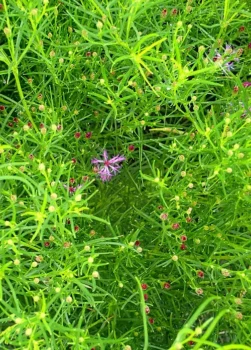
Narrowleaf Ironweed: A Rare Native Gem Worth Protecting in Your Garden
If you’re looking to add a touch of wild beauty to your garden while supporting local ecosystems, narrowleaf ironweed (Vernonia lettermannii) might just be the perfect plant for you. This native perennial brings stunning purple blooms to late-season landscapes, but there’s something special you should know about this particular ironweed before you start planning where to plant it.
What Makes Narrowleaf Ironweed Special
Narrowleaf ironweed is a herbaceous perennial forb that belongs to the diverse family of native wildflowers that once painted America’s prairies and wetlands purple each fall. Unlike woody shrubs or trees, this plant dies back to the ground each winter and returns fresh each spring, growing from buds at or below the soil surface.
What sets this ironweed apart from its more common cousins is both its limited range and its increasingly rare status in the wild. It’s currently classified as S3 or Vulnerable on the Global Conservation Status scale, meaning it’s at risk due to its restricted range and limited population numbers.
Where Does Narrowleaf Ironweed Call Home?
This native beauty has a surprisingly small natural range, growing wild in just two states: Arkansas and Oklahoma. Within these areas, you’ll find it thriving in wetland environments and moist soils where many other plants struggle to establish.
- Species observed
- No observations
A Plant That Loves Water
One of the most interesting things about narrowleaf ironweed is its relationship with water. Depending on where you live, this plant has different moisture preferences:
- In the Great Plains region, it’s considered an Obligate Wetland plant, meaning it almost always grows in wetlands
- In the Atlantic and Gulf Coastal Plain and Eastern Mountains regions, it’s Facultative Wetland, usually found in wet areas but occasionally tolerating drier spots
This makes it an excellent choice for rain gardens, pond edges, or those troublesome wet spots in your yard where other plants just won’t thrive.
Growing Narrowleaf Ironweed: The Responsible Way
Important note: Because this plant is rare in the wild, it’s crucial to source it responsibly. Never collect plants or seeds from wild populations. Instead, look for nurseries that specialize in native plants and can provide ethically propagated specimens.
Ideal Growing Conditions
Narrowleaf ironweed thrives in:
- USDA Hardiness Zones 6-9
- Full sun to partial shade locations
- Moist to consistently wet soils
- Areas that experience seasonal flooding or standing water
Planting and Care Tips
Once you’ve found a responsible source for your narrowleaf ironweed, growing it is relatively straightforward:
- Plant in spring after the last frost date
- Choose the wettest, lowest spot in your garden
- Space plants 2-3 feet apart to allow for mature spread
- Water regularly the first year until established
- Once established, this plant is remarkably low-maintenance
- Cut back to ground level in late winter before new growth emerges
Why Your Garden (and Local Wildlife) Will Love It
Beyond its conservation value, narrowleaf ironweed earns its place in the garden through its late-season beauty and ecological benefits. The clusters of purple flowers appear in late summer and fall, providing a crucial nectar source when many other plants have finished blooming.
This timing makes it particularly valuable for migrating butterflies and other pollinators preparing for winter. Bees, butterflies, and other beneficial insects rely on late-blooming natives like this ironweed to fuel up before the cold months ahead.
Perfect Garden Companions
Narrowleaf ironweed works beautifully in:
- Native plant gardens focused on regional species
- Prairie restoration projects
- Rain gardens and bioswales
- Wetland edge plantings
- Wildlife habitat gardens
Pair it with other moisture-loving natives like cardinal flower, swamp milkweed, or native sedges for a stunning late-season display that supports local ecosystems.
The Bottom Line: A Plant Worth Protecting
Growing narrowleaf ironweed in your garden serves a dual purpose: you get a beautiful, low-maintenance native plant that provides late-season color and wildlife benefits, while also helping to preserve a species that’s becoming increasingly rare in the wild.
Just remember the golden rule: source responsibly. By choosing ethically propagated plants from reputable native plant nurseries, you’re supporting conservation efforts rather than contributing to the problem. Your garden can become a small but important refuge for this vulnerable native species.
In a world where many native plants are disappearing from their natural habitats, every garden that includes responsibly sourced narrowleaf ironweed becomes a small act of conservation. And isn’t that exactly the kind of gardening that makes a real difference?