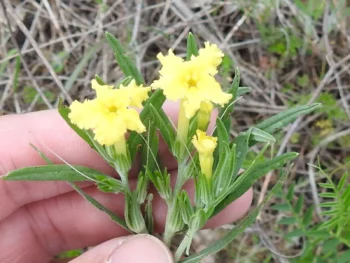
Narrowleaf Stoneseed: A Prairie Gem for Your Native Garden
If you’re looking to add some early spring sunshine to your native garden, narrowleaf stoneseed (Lithospermum incisum) might just be the perfect plant you never knew you needed. This cheerful little prairie native brings bright yellow blooms to the landscape just when gardeners are desperately craving color after a long winter.
What is Narrowleaf Stoneseed?
Narrowleaf stoneseed is a perennial forb – essentially a non-woody flowering plant that comes back year after year. Don’t let the stoneseed name fool you into thinking it’s tough to grow; it actually refers to the plant’s hard, stone-like seeds. This native wildflower produces clusters of small, tubular yellow flowers that practically glow in the spring sunshine.
You might also encounter this plant under several other botanical names in older references, including Batschia linearifolia, Lithospermum angustifolium, or Lithospermum linearifolium – botanists sure do love to keep us on our toes with name changes!
Where Does It Grow Naturally?
This prairie native has quite an impressive range across North America. You’ll find it growing wild from Canada down through the central and western United States, spanning from Alberta and British Columbia all the way down to Texas and Florida. It calls home to states including Colorado, Kansas, Nebraska, the Dakotas, and many others across the Great Plains and beyond.
- Species observed
- No observations
However, there’s an important note for gardeners in Arkansas: narrowleaf stoneseed has a rarity status of S2S3 in the state, meaning it’s considered uncommon to rare. If you live in Arkansas and want to grow this beauty, make sure you source your plants or seeds from reputable native plant nurseries rather than wild collection.
Why Plant Narrowleaf Stoneseed?
Here are some compelling reasons to consider adding this native to your landscape:
- Early pollinator magnet: Those bright yellow flowers emerge in spring when pollinators are desperately seeking nectar sources
- Low maintenance: Once established, it’s quite drought tolerant and requires minimal care
- Native authenticity: Perfect for prairie restorations and native plant gardens
- Unique texture: The narrow, linear leaves add interesting textural contrast to garden designs
- Ground cover potential: Its low-growing habit makes it excellent for covering ground naturally
Where to Use It in Your Landscape
Narrowleaf stoneseed shines in several garden settings:
- Prairie and meadow gardens: A natural fit for recreating native grassland ecosystems
- Rock gardens: Thrives in well-drained, rocky conditions
- Xeriscapes: Perfect for water-wise landscaping
- Native plant borders: Provides early season interest before other natives get going
- Naturalistic landscapes: Adds authentic prairie character without looking overly cultivated
Growing Conditions and Care
The good news is that narrowleaf stoneseed isn’t particularly fussy once you understand its preferences:
Sunlight: Thrives in full sun but can tolerate partial shade
Soil: Prefers well-drained, sandy, or rocky soils. It actually performs better in poor soils than rich garden loam, so don’t feel bad about that neglected corner of your yard!
Water: Drought tolerant once established. Avoid overwatering, which can lead to problems
Climate: Hardy in USDA zones 3-8, making it suitable for most temperate regions
Planting and Propagation Tips
Growing narrowleaf stoneseed from seed is your best bet, though it requires a bit of patience:
- Seeds need cold stratification (a period of cold, moist conditions) to germinate properly
- Sow seeds in fall for natural cold treatment over winter
- Alternatively, cold stratify seeds in the refrigerator for 30-60 days before spring planting
- Direct sow rather than starting indoors, as the plants don’t love root disturbance
- Be patient – germination can be sporadic and slow
Wildlife and Ecosystem Benefits
Beyond its garden appeal, narrowleaf stoneseed plays important ecological roles. Its early spring flowers provide crucial nectar for native bees, butterflies, and other pollinators when few other food sources are available. The plant also supports various native insects throughout its growing season, contributing to a healthy garden ecosystem.
The Bottom Line
Narrowleaf stoneseed might not win any flashy flower awards, but it’s exactly the kind of reliable, ecologically valuable native that forms the backbone of sustainable landscapes. If you’re working on a prairie garden, rock garden, or just want to support early-season pollinators, this cheerful yellow wildflower deserves a spot in your plant palette. Just remember to source it responsibly, especially if you’re gardening in areas where it’s considered uncommon.
With minimal care requirements and maximum ecological benefits, narrowleaf stoneseed proves that sometimes the best garden plants are the ones that know how to take care of themselves while quietly supporting the web of life around them.