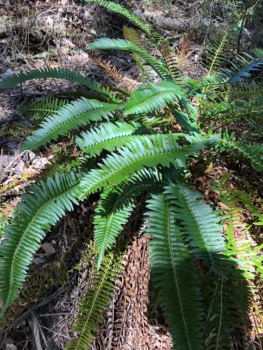
Narrowleaf Swordfern: A Rare California Native Worth Knowing
If you’re a native plant enthusiast with a keen eye for the unusual, you might find yourself intrigued by the narrowleaf swordfern (Polystichum imbricans curtum). This California native represents a fascinating piece of our botanical heritage, though it’s one that even seasoned gardeners might not encounter very often.
What Makes This Fern Special?
The narrowleaf swordfern is a perennial fern that belongs to the shield fern family. What sets this particular variety apart is right there in its name – those distinctively narrow fronds that give it a more delicate appearance compared to its more robust relatives. It’s also known by the synonym Polystichum munitum ssp. curtum, which hints at its relationship to the more familiar western sword fern.
Where You’ll Find It Growing Wild
This fern calls California home, where it has adapted to the state’s unique Mediterranean climate and diverse landscapes. As a native species to the lower 48 states, it has deep roots in the local ecosystem, though its distribution appears to be quite limited within California’s borders.
- Species observed
- No observations
A Word About Rarity
Here’s where things get interesting – and a bit concerning. The narrowleaf swordfern has a global conservation status of S4T3?, which essentially means its conservation status is somewhat uncertain but suggests it may be uncommon to rare. If you’re lucky enough to encounter this fern or find it available from specialty native plant nurseries, it’s crucial to ensure you’re getting responsibly sourced material. Never collect from wild populations, as this could further impact already limited numbers.
The Garden Potential
Like most ferns, the narrowleaf swordfern would likely thrive in shaded to partially shaded garden areas where it can enjoy consistent moisture and protection from harsh afternoon sun. While specific growing requirements for this particular variety aren’t well documented, ferns in the Polystichum genus generally prefer:
- Well-draining but moisture-retentive soil
- Partial to full shade
- Protection from strong winds
- Organic-rich growing medium
Why Consider This Fern?
Beyond its rarity appeal, native ferns like this one offer several garden benefits. They provide year-round structure in shaded areas, require minimal maintenance once established, and support local ecosystems in ways we’re still discovering. Ferns also add that lush, forest-floor feeling to gardens that many gardeners crave.
The Challenge of Growing Something Rare
The biggest hurdle with the narrowleaf swordfern isn’t necessarily growing it – it’s finding it. With limited documentation and uncertain conservation status, this isn’t a plant you’ll likely stumble across at your local garden center. If you’re determined to add this unique native to your collection, your best bet is connecting with specialized native plant societies, botanical gardens, or conservation organizations in California.
Alternatives to Consider
If the narrowleaf swordfern proves elusive, don’t despair! California offers plenty of other native ferns that can provide similar aesthetic appeal and ecological benefits. The more common western sword fern (Polystichum munitum) shares genetic heritage and offers that same lush, evergreen presence in shaded gardens.
The narrowleaf swordfern represents one of those fascinating botanical mysteries that remind us how much we still have to learn about our native flora. Whether you’re a collector of rare plants or simply someone who appreciates the subtle beauty of ferns, this California native deserves a spot on your plants to watch for list.