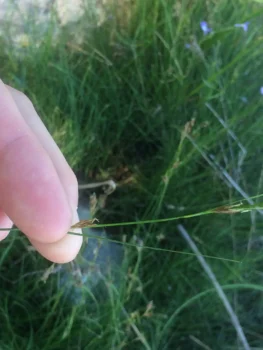
Needle Beaksedge: A Delicate Native Sedge for Wetland Gardens
If you’re passionate about native plants and have a wet spot in your garden that’s been giving you trouble, let me introduce you to needle beaksedge (Rhynchospora capillacea). This unassuming little sedge might not win any flashy flower contests, but it’s a true champion of North American wetlands and could be exactly what your soggy garden corner needs.
What Exactly Is Needle Beaksedge?
Needle beaksedge is a perennial sedge—part of that wonderful world of grass-like plants that includes sedges, rushes, and true grasses. Don’t let the grass-like description fool you into thinking it’s boring, though. This native beauty has fine, almost hair-like foliage that creates a delicate, textural element wherever it grows.
You might also see it listed under its botanical synonyms Rhynchospora smallii or various forms of Rhynchospora capillacea in older references, but they’re all referring to our same needle beaksedge.
Where Does Needle Beaksedge Call Home?
This sedge is a true North American native, with an impressively wide range that spans from Canada down through much of the eastern and central United States. You can find it naturally growing in Alberta, British Columbia, Manitoba, New Brunswick, Nova Scotia, Ontario, Quebec, Saskatchewan, Labrador, and Newfoundland. In the U.S., it ranges across Alabama, Arkansas, Connecticut, Illinois, Indiana, Iowa, Maine, Massachusetts, Michigan, Minnesota, Missouri, New Hampshire, New Jersey, New York, North Dakota, Ohio, Oklahoma, Pennsylvania, South Dakota, Tennessee, Texas, Vermont, Virginia, and Wisconsin.
- Species observed
- No observations
A Word of Caution: Rarity Matters
Before you rush out to plant needle beaksedge everywhere, there’s something important you need to know. This plant is considered rare in several states:
- Alabama: S1 status (critically imperiled)
- Arkansas: S2 status (imperiled)
- New Jersey: Endangered and listed as S1
What does this mean for you as a gardener? If you want to grow needle beaksedge, please make sure you source your plants or seeds from reputable native plant nurseries that propagate their stock rather than wild-collect it. Never harvest from wild populations—we want to help this species thrive, not contribute to its decline.
Why Grow Needle Beaksedge?
You might be wondering why you’d want to add such a specialized plant to your landscape. Here are some compelling reasons:
- Wetland restoration: If you’re working on restoring a natural wetland area or creating habitat for native wildlife, needle beaksedge is an authentic choice
- Problem solver: Got a perpetually soggy spot where other plants struggle? This sedge thrives in those conditions
- Native garden authenticity: For purists creating truly native plant communities, especially in wetland settings
- Low maintenance: Once established in the right conditions, it pretty much takes care of itself
Growing Conditions: It’s All About the Water
Needle beaksedge is what we call an obligate wetland plant across all regions where it grows. This means it almost always occurs in wetlands and needs consistently moist to wet conditions to thrive. Here’s what it needs:
- Moisture: Consistently wet to moist soil—think bog garden or rain garden conditions
- Light: Full sun to partial shade
- Soil: Prefers acidic, organic-rich soils typical of wetland environments
- Hardiness: Adapted to zones roughly 3-9 based on its natural range
Perfect Garden Settings
Needle beaksedge isn’t for every garden, but it’s perfect for these specialized situations:
- Rain gardens designed to handle stormwater runoff
- Bog gardens or constructed wetlands
- Native plant gardens with consistent moisture
- Naturalistic landscapes mimicking native wetland communities
- Restoration projects in degraded wetland areas
Planting and Care Tips
If you’ve decided needle beaksedge is right for your wet garden spot, here’s how to help it succeed:
- Site selection: Choose the wettest spot in your landscape—this plant doesn’t tolerate drought
- Soil preparation: Amend with organic matter if your soil lacks it, but avoid fertilizers
- Planting: Spring planting gives the best establishment, but fall can work too
- Maintenance: Very minimal once established—just ensure consistent moisture
- Patience: Like many native sedges, it may take a season or two to really settle in
Wildlife and Ecosystem Benefits
While needle beaksedge might not be a showy pollinator magnet, it plays important roles in wetland ecosystems. It provides habitat structure for small wetland creatures and contributes to the complex web of relationships that make healthy wetlands function.
The Bottom Line
Needle beaksedge isn’t a plant for everyone—it’s a specialist that requires specific conditions and careful sourcing due to its rarity in some areas. But if you have the right wet conditions and want to grow an authentic piece of North American wetland heritage, this delicate sedge could be a wonderful addition to your native plant collection. Just remember to source responsibly and give it the consistently moist conditions it craves!