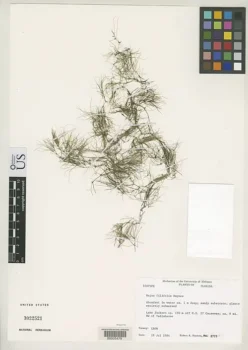
Needleleaf Waternymph: A Rare Aquatic Native Worth Protecting
Meet the needleleaf waternymph (Najas filifolia), a delicate underwater treasure that’s as rare as it is specialized. This annual aquatic plant might not be the showstopper of your typical flower bed, but for those passionate about wetland conservation and aquatic gardening, it represents something truly special – a critically endangered piece of our native aquatic heritage.
What Makes This Plant Special
The needleleaf waternymph is a native forb that lives its entire life submerged beneath the water’s surface. True to its common name, this plant produces thin, needle-like leaves that grow in delicate whorls around slender stems. While it may not win any beauty contests with its small, inconspicuous flowers, its ecological significance far outweighs its modest appearance.
As an annual plant, needleleaf waternymph completes its entire life cycle within a single growing season, making each plant a precious link in maintaining this rare species’ survival.
Where It Calls Home
This southeastern native has a remarkably limited range, naturally occurring only in Florida and Georgia. Its distribution is so restricted that it’s earned a Global Conservation Status of S1, meaning it’s critically imperiled with typically only five or fewer known locations remaining.
- Species observed
- No observations
A Critical Conservation Alert
Before we dive into growing tips, there’s something crucial you need to know: needleleaf waternymph is extremely rare. With fewer than 1,000 individuals likely remaining in the wild, this plant teeters on the edge of extinction. If you’re considering adding this species to your aquatic garden, you must source it responsibly from reputable native plant suppliers or conservation programs – never from wild populations.
Growing Conditions: Not for the Casual Water Gardener
This isn’t a plant for your average backyard pond. Needleleaf waternymph requires very specific conditions:
- Water depth: Fully submerged in freshwater
- Water clarity: Clear to slightly turbid water
- Substrate: Sandy or muddy bottom
- Climate: USDA Hardiness Zones 8-10
- Wetland status: Obligate wetland species (almost always occurs in wetlands)
Is This Plant Right for Your Garden?
Honestly? Probably not, unless you’re working on a serious wetland restoration project or have specialized aquatic conservation goals. Here’s why you might want to grow it – and why you might not:
Reasons to grow needleleaf waternymph:
- Contributing to conservation of a critically endangered native species
- Supporting authentic wetland ecosystem restoration
- Adding biodiversity to specialized aquatic gardens
- Educational value for native plant enthusiasts
Reasons it might not be suitable:
- Extremely limited availability from responsible sources
- Requires highly specialized growing conditions
- Minimal aesthetic appeal compared to other aquatic plants
- Annual lifecycle means replanting each year
- Limited wildlife benefits compared to other native aquatics
Planting and Care Tips
If you’ve decided to take on the challenge of growing this rare native, here’s what you need to know:
- Work with wetland restoration professionals or conservation organizations
- Ensure your water source is clean and free from pollutants
- Plant in spring when water temperatures begin to warm
- Allow natural substrate to accumulate rather than using artificial materials
- Monitor water quality regularly
- Collect and preserve seeds for future propagation (with proper permits)
Wildlife and Pollinator Benefits
While needleleaf waternymph doesn’t offer the nectar-rich flowers that attract butterflies and bees, it does play a role in aquatic ecosystems. The submerged foliage provides habitat for small aquatic invertebrates and fish, though its benefits are more subtle than showy flowering natives.
The Bottom Line
Needleleaf waternymph isn’t a plant for everyone, but for dedicated conservationists and specialized aquatic gardeners, it represents an opportunity to participate in preserving one of our rarest native species. If you’re not equipped for the specialized care this plant requires, consider supporting its conservation through habitat protection organizations instead.
Remember: with great rarity comes great responsibility. If you choose to grow needleleaf waternymph, you’re becoming a guardian of a species that desperately needs our help to survive.