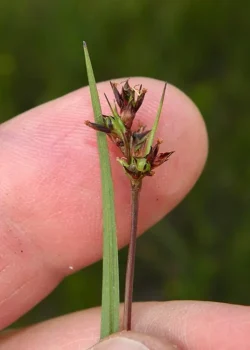
Netted Nutrush: A Humble Native Sedge for Wetland Gardens
If you’re looking to add authentic native character to your wetland garden or rain garden, you might want to meet the netted nutrush (Scleria reticularis). This unassuming little sedge might not win any beauty contests, but it’s a hardworking native that deserves consideration for naturalized landscapes and ecological restoration projects.
What is Netted Nutrush?
Netted nutrush is an annual grass-like plant belonging to the sedge family (Cyperaceae). Don’t let the name fool you—despite being called a rush, it’s actually a true sedge. Like other members of its family, it has that characteristic triangular stem that makes sedges easy to distinguish from true grasses.
This native species goes by the botanical name Scleria reticularis and has been quietly growing in American wetlands for centuries. It’s a modest plant that plays an important supporting role in wetland ecosystems across much of the eastern United States.
Where Does Netted Nutrush Grow Naturally?
Netted nutrush is native to the lower 48 states and Puerto Rico, with a impressive distribution that spans from New England down to Florida and west to Texas. You can find it naturally occurring in these states and territories: Alabama, Arkansas, Connecticut, Delaware, District of Columbia, Florida, Georgia, Illinois, Indiana, Louisiana, Maryland, Massachusetts, Michigan, Mississippi, Missouri, New Hampshire, New Jersey, New York, North Carolina, Oklahoma, Pennsylvania, Rhode Island, South Carolina, Tennessee, Texas, Virginia, West Virginia, Wisconsin, and Puerto Rico.
- Species observed
- No observations
Important Conservation Note
Before you start planning your netted nutrush garden, there’s something important to know: this species has a special conservation status in New Jersey, where it’s listed as Listed Pinelands, S4. This means it’s somewhat uncommon in that region. If you’re gardening in New Jersey or other areas where it might be less common, make sure to source your plants or seeds responsibly from reputable native plant nurseries rather than collecting from wild populations.
Why Consider Netted Nutrush for Your Garden?
Let’s be honest—netted nutrush isn’t going to be the star of your garden show. But here’s why you might want to give this humble native a chance:
- Authentic wetland restoration: If you’re creating a rain garden or restoring a wetland area, this species adds ecological authenticity
- Low maintenance: As an annual, it completes its life cycle and self-seeds, requiring minimal intervention
- Wetland specialist: Perfect for those challenging wet spots in your landscape
- Wildlife habitat: Provides food and shelter for wetland wildlife
- Educational value: Great for teaching about native wetland ecosystems
Growing Conditions and Care
Netted nutrush is definitely not a plant for your typical flower border. This species has some very specific preferences that reflect its wetland origins:
Wetland Requirements
This plant’s relationship with water varies by region, but the message is clear—it loves moisture:
- In most regions (Caribbean, Eastern Mountains and Piedmont, Midwest, Northcentral & Northeast), it’s classified as Obligate Wetland, meaning it almost always occurs in wetlands
- In the Atlantic and Gulf Coastal Plain and Great Plains regions, it’s Facultative Wetland, meaning it usually occurs in wetlands but may occasionally be found in non-wetland areas
Ideal Growing Conditions
- Soil: Consistently moist to wet, acidic soils
- Light: Full sun to partial shade
- Hardiness: USDA zones 4-10
- Water: Requires consistent moisture; perfect for rain gardens and bog areas
What Type of Garden is This Plant Right For?
Netted nutrush isn’t for everyone, but it’s perfect for specific garden types:
- Rain gardens: Excellent choice for managing stormwater runoff
- Bog gardens: Thrives in consistently wet conditions
- Wetland restoration projects: Authentic native for ecological restoration
- Naturalized landscapes: Adds texture to wild, natural-looking areas
- Educational gardens: Perfect for demonstrating native wetland plant communities
Planting and Care Tips
The good news about netted nutrush is that once you get the growing conditions right, it pretty much takes care of itself:
- Start with seeds: As an annual, it’s typically grown from seed rather than transplants
- Plant in spring: Sow seeds in late winter to early spring in consistently moist soil
- Maintain moisture: The key to success is never letting the soil dry out completely
- Let it self-seed: Allow some plants to go to seed to ensure next year’s population
- Minimal fertilization: Wetland natives typically don’t need supplemental feeding
Wildlife and Ecological Benefits
While netted nutrush might not attract butterflies and hummingbirds like showier natives, it still plays an important ecological role. As part of a wetland plant community, it helps stabilize soil, filter water, and provides habitat structure for various wetland creatures.
The Bottom Line
Netted nutrush is a specialist plant for specialist gardens. If you have a wet area that needs native plants, if you’re working on wetland restoration, or if you simply want to create an authentic representation of eastern American wetlands, this humble sedge deserves consideration. Just remember to source it responsibly, especially if you’re gardening in areas where it has conservation concerns.
It may not be the showiest plant in your garden, but sometimes the most important players work quietly behind the scenes—and netted nutrush is definitely one of those unsung heroes of the wetland world.