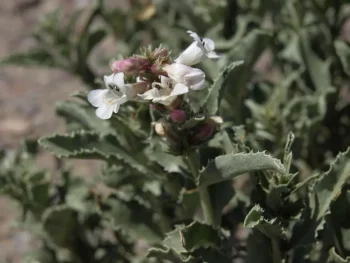
Nevada Sanddune Beardtongue: A Rare Desert Gem Worth Protecting
If you’re passionate about native plants and love the idea of growing something truly special, let me introduce you to the Nevada sanddune beardtongue (Penstemon arenarius). This little-known perennial is a true Nevada native that’s as rare as it is beautiful, making it a fascinating addition for dedicated native plant gardeners.
What Makes This Plant Special
Nevada sanddune beardtongue is a perennial forb that belongs to the beloved penstemon family. Like its more common cousins, this plant produces tubular flowers that are absolutely irresistible to pollinators. What sets it apart is its incredible adaptation to sandy desert environments and its extremely limited range.
You might also see this plant listed under its synonym Penstemon maguirei, but regardless of the name, you’re looking at one of Nevada’s botanical treasures.
Where It Calls Home
This penstemon is what botanists call an endemic species – it’s found nowhere else in the world except Nevada. It has carved out its niche in the sandy desert habitats of the Silver State, where it has learned to thrive in conditions that would challenge most other plants.
- Species observed
- No observations
A Word of Caution: Rarity Matters
Here’s something important every gardener should know: Nevada sanddune beardtongue has a conservation status of S2S3, which means it’s considered rare to uncommon in the wild. This isn’t just a number – it’s a reminder that this plant needs our help.
If you’re interested in growing this species, please make sure you source it responsibly. Never collect from wild populations, and always purchase from reputable native plant nurseries that propagate their own stock. By choosing responsibly sourced plants, you’re helping protect wild populations while still enjoying this rare beauty in your garden.
Garden Appeal and Landscape Role
Nevada sanddune beardtongue brings unique character to specialized garden settings. Its tubular flowers, typical of the penstemon family, create lovely displays that attract native bees and hummingbirds. The plant’s low-growing, herbaceous nature makes it perfect for:
- Desert and xeric gardens
- Native plant collections
- Rock gardens with excellent drainage
- Conservation-focused landscapes
This isn’t a plant for every garden, but in the right setting, it’s absolutely magical.
Growing Conditions: Think Desert
Success with Nevada sanddune beardtongue comes down to one key principle: replicate its natural sandy desert habitat. This means:
- Sandy, extremely well-draining soil (clay soil is a death sentence)
- Full sun exposure
- Minimal water once established
- Good air circulation
Based on its Nevada origins, this plant likely thrives in USDA hardiness zones 4-8, handling both cold winters and hot, dry summers.
Planting and Care Tips
Growing this rare beauty successfully requires attention to detail:
- Amend heavy soils with coarse sand and gravel to improve drainage
- Plant in spring after the last frost
- Water sparingly – overwatering is more dangerous than drought
- Avoid fertilizers, which can harm desert-adapted plants
- Mulch with gravel or decomposed granite rather than organic mulch
Supporting Pollinators and Wildlife
Like other penstemons, Nevada sanddune beardtongue is a pollinator magnet. Its tubular flowers are perfectly designed for native bees and hummingbirds, making it a valuable addition to pollinator-supporting gardens. Every plant you grow helps support the insects and birds that depend on native flora.
Is This Plant Right for You?
Nevada sanddune beardtongue is perfect for gardeners who:
- Live in arid or semi-arid climates
- Are passionate about native plants and conservation
- Have well-draining, sandy soil or are willing to create it
- Want to support rare plant preservation
- Enjoy the challenge of growing specialty plants
It’s not the right choice if you have heavy clay soil, prefer high-water gardens, or want a low-maintenance groundcover for large areas.
The Bottom Line
Nevada sanddune beardtongue represents something special in the gardening world – a chance to grow and protect a truly rare native plant. While it requires specific conditions and responsible sourcing, the reward is being part of conservation efforts while enjoying a unique piece of Nevada’s natural heritage.
If you’re up for the challenge and can provide the right conditions, this rare penstemon will reward you with distinctive beauty and the satisfaction of supporting biodiversity. Just remember: always source responsibly and never collect from the wild. Let’s keep this desert gem thriving for generations to come.