Nevin’s Barberry: A Rare California Treasure Worth Saving
Meet one of California’s most endangered native shrubs – a plant so rare that finding it in the wild is like discovering a botanical unicorn. Nevin’s barberry (Mahonia nevinii) isn’t just another pretty face in the garden; it’s a conservation success story waiting to happen in your backyard.
What Makes Nevin’s Barberry Special?
This perennial shrub is exclusively native to Southern California, where it once thrived in the chaparral and woodland areas of Los Angeles and Riverside counties. Today, it’s critically imperiled with a Global Conservation Status of S1, meaning there are typically fewer than 5 populations or less than 1,000 individuals remaining in the wild. In the United States, it carries the sobering designation of Endangered.
- Species observed
- No observations
But here’s where you come in as a conservation hero. By growing Nevin’s barberry in your garden – with responsibly sourced plants, of course – you’re literally helping save a species from extinction.
A Shrub with Serious Style
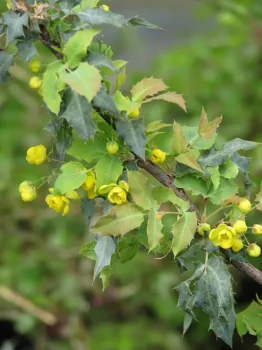
Don’t let its rarity fool you into thinking this is some drab, hard-to-love plant. Nevin’s barberry is a multi-stemmed woody shrub that typically stays under 13-16 feet tall, making it perfect for residential landscapes. Its holly-like compound leaves feature distinctive spiny leaflets that create an attractive architectural presence year-round.
Come spring, the plant puts on quite a show with clusters of bright yellow flowers that practically glow against the spiny foliage. These early bloomers are followed by blue-black berries that wildlife absolutely adore. It’s like having your own private wildlife café that also happens to be drop-dead gorgeous.
Perfect for the Right Garden
Nevin’s barberry thrives in USDA hardiness zones 9-10, making it ideal for Southern California’s Mediterranean climate. It’s particularly well-suited for:
- Drought-tolerant and water-wise gardens
- Native plant collections
- Wildlife habitat gardens
- Mediterranean-style landscapes
- Conservation-focused gardens
This shrub works beautifully as a specimen plant or focal point, especially in areas where you want to create visual interest with unique textures and forms. Its architectural quality makes it perfect for modern landscape designs that celebrate California’s natural heritage.
Growing Nevin’s Barberry Successfully
The good news? Once established, this endangered beauty is surprisingly low-maintenance. Here’s how to keep it happy:
Location and Soil: Choose a spot with well-draining soil – this is absolutely crucial. Nevin’s barberry despises wet feet and will sulk (or worse, die) in soggy conditions. It naturally grows on slopes and rocky areas, so think drainage, drainage, drainage.
Sun and Water: While it can handle full sun, partial shade often works better, especially in hotter inland areas. Once established, it’s remarkably drought-tolerant, but young plants need regular water their first year to develop strong root systems.
Care Tips: This is essentially a plant-it-and-forget-it shrub once established. Minimal pruning needed, just remove any dead or damaged growth. In extreme heat areas, provide some afternoon shade to prevent leaf scorch.
Pollinator and Wildlife Magnet
Those cheerful yellow spring flowers aren’t just pretty – they’re ecological powerhouses. Blooming when few other plants are flowering, Nevin’s barberry provides crucial early-season nectar for bees and other pollinators. The berries that follow are a hit with birds, making your garden a year-round wildlife destination.
The Responsible Gardener’s Choice
Here’s the most important part: if you decide to grow Nevin’s barberry, please – and we cannot stress this enough – only purchase plants from reputable nurseries that propagate their stock rather than collect from wild populations. Look for nurseries that specialize in native plants and can verify their propagation methods.
By choosing responsibly sourced Nevin’s barberry, you’re not just adding a unique and beautiful plant to your garden – you’re participating in conservation efforts that could help bring this species back from the brink of extinction. Now that’s what we call gardening with purpose!
Every garden that includes this rare California native is a small victory for biodiversity. And honestly, how cool is it to tell your neighbors you’re growing one of California’s rarest plants right in your own backyard?