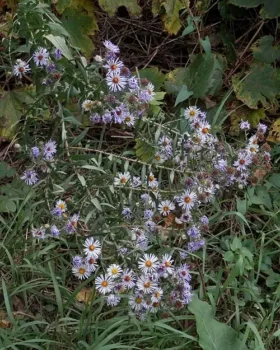
New England Aster: A Fall Blooming Native Superstar
If you’re looking for a native perennial that brings spectacular late-season color to your garden while supporting local wildlife, look no further than the New England aster (Symphyotrichum novaeangliae). This hardy North American native is like nature’s grand finale—bursting into bloom just when most other flowers are calling it quits for the year.
What Makes New England Aster Special?
New England aster is a true native treasure, naturally occurring across a vast swath of North America. As a perennial forb (that’s botanist-speak for a non-woody flowering plant), it comes back year after year, growing stronger and more magnificent with time. You might also encounter this beauty under its former scientific name, Aster novae-angliae, though it’s been reclassified to Symphyotrichum novaeangliae.
This remarkable plant is native to both Canada and the lower 48 United States, thriving in an impressive range of locations from coast to coast. You’ll find it growing naturally in states spanning from Maine to Montana, and from Alabama to British Columbia—talk about adaptable!
- Species observed
- No observations
A Visual Feast for Late Summer and Fall
New England aster truly shines when it comes to aesthetic appeal. Picture this: clusters of vibrant purple-pink daisy-like flowers with sunny yellow centers, creating a spectacular display from late summer through fall. These cheerful blooms appear just when your garden needs them most, providing crucial color when many other plants are winding down for the season.
Perfect for Pollinator-Friendly Gardens
Here’s where New England aster really earns its keep in the garden. This native powerhouse is a magnet for butterflies, bees, and other beneficial insects. Its late-season blooms provide essential nectar when many other food sources have disappeared, making it a critical component of any pollinator garden. Monarchs, in particular, rely heavily on fall-blooming asters during their epic migration south.
Where Does New England Aster Fit in Your Landscape?
This versatile native works beautifully in several garden settings:
- Naturalized meadow areas and prairie gardens
- Rain gardens and wet spots in your yard
- Cottage-style gardens for that relaxed, informal look
- Native plant gardens and wildlife habitats
- Back-of-the-border plantings where it can spread freely
Thanks to its facultative wetland status across all regions of North America, New England aster is particularly well-suited for areas that stay consistently moist or occasionally flood. It’s nature’s way of saying I’ve got this wet spot covered!
Growing Conditions: Pretty Darn Easy
One of the best things about New England aster is how accommodating it is. This adaptable native thrives in USDA hardiness zones 4-8, making it suitable for most temperate regions. It prefers full sun to partial shade and loves moist to wet soils, though it’s surprisingly tolerant of various soil types, including heavy clay that gives other plants fits.
Planting and Care Tips
Growing New England aster successfully is refreshingly straightforward:
- Planting: Spring or fall planting works well. Space plants about 2-3 feet apart to allow for their natural spreading habit
- Watering: Keep soil consistently moist, especially during dry spells
- Maintenance: Divide clumps every 3-4 years in spring to prevent overcrowding and maintain vigor
- Deadheading: Remove spent flowers if you want to prevent self-seeding, though many gardeners enjoy the natural reseeding
- Spreading: Be aware that this plant spreads by underground rhizomes—a feature, not a bug, in naturalized settings
Should You Plant New England Aster?
For most gardeners, the answer is a resounding yes! New England aster offers tremendous benefits with minimal fuss. Its native status means it’s perfectly adapted to local growing conditions, while its late-season blooms and pollinator appeal make it an ecological powerhouse.
However, consider your space and goals carefully. If you prefer formal, highly controlled garden beds, New England aster’s tendency to spread and self-seed might not align with your vision. But if you’re creating habitat, restoring natural areas, or simply want a low-maintenance native that delivers stunning fall color year after year, this aster is hard to beat.
With its impressive geographic range, adaptability to various growing conditions, and significant ecological benefits, New England aster represents native gardening at its finest—beautiful, beneficial, and refreshingly easy to grow.