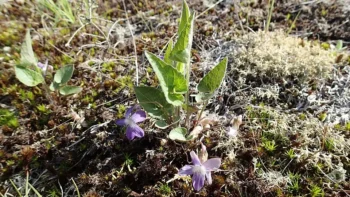
New England Blue Violet: A Charming Native Groundcover for Shady Spots
If you’re looking for a delightful native violet that brings both beauty and ecological value to your garden, meet the New England blue violet (Viola novaeangliae). This understated charmer might not be the showiest plant in your garden, but it’s definitely one that earns its keep through reliability, native credentials, and quiet appeal.
What Makes This Violet Special?
The New England blue violet is a perennial forb—basically a non-woody plant that comes back year after year. It’s a true North American native, naturally occurring across the northeastern United States and southeastern Canada. You’ll find wild populations thriving from Manitoba down to Wisconsin and across New England states including Maine, New Hampshire, Vermont, and New York.
This violet goes by the botanical name Viola novaeangliae, and you might occasionally see it listed under older scientific names like Viola septentrionalis var. grisea or Viola sororia var. novae-angliae in older gardening references.
- Species observed
- No observations
Garden Appeal and Landscape Role
Don’t expect dramatic garden theatrics from this modest beauty. The New England blue violet offers subtle charm with small, violet-blue flowers that appear in spring and attractive heart-shaped leaves that form a low groundcover. It’s the kind of plant that creates a gentle carpet of green in shaded areas where other groundcovers might struggle.
This violet works beautifully in:
- Woodland gardens and naturalized areas
- Shade gardens where you need reliable groundcover
- Rain gardens and moisture-retentive landscapes
- Native plant gardens focused on regional species
Growing Conditions and Care
Here’s where the New England blue violet really shines—it’s wonderfully adaptable to different moisture conditions depending on your region. In the Great Plains, it can handle both wet and dry sites, while in the Midwest and Northeast, it strongly prefers consistently moist to wet soils.
For best results, provide:
- Partial to full shade (it appreciates protection from harsh afternoon sun)
- Consistently moist soil, especially in eastern regions
- USDA hardiness zones 3-7
- Rich, organic soil when possible
Planting and Maintenance Tips
The good news? This violet is refreshingly low-maintenance once established. It’s a perennial that will return each year and often self-seeds to create natural colonies over time. Plant it in spring or fall, water regularly until established, and then let it do its thing.
Since specific propagation information for this species is limited, your best bet is to source plants from native plant nurseries or participate in plant swaps with other native gardening enthusiasts.
Wildlife and Pollinator Benefits
Like most native violets, the New England blue violet supports local ecosystems by attracting small bees and other beneficial insects during its blooming period. Native violets are also known to serve as host plants for several butterfly species, making this small plant a valuable addition to pollinator-friendly gardens.
Should You Plant It?
If you have the right growing conditions—particularly moist, shaded areas in the northern regions where this plant naturally occurs—the New England blue violet makes an excellent choice. It’s especially valuable for gardeners committed to using native plants and supporting local ecosystems.
Keep in mind that this isn’t a plant for gardeners seeking bold, dramatic effects. Instead, it’s perfect for those who appreciate subtle beauty and want to create naturalized areas that support wildlife while requiring minimal maintenance.
The New England blue violet proves that sometimes the most valuable garden plants are the quiet ones that simply do their job well, year after year, while supporting the web of life around them.