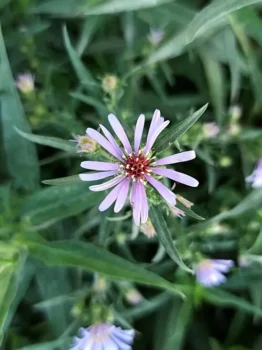
New York Aster: A Native Fall Bloomer That Loves Getting Its Feet Wet
If you’re looking for a native perennial that can handle soggy soil and still put on a spectacular fall flower show, meet the New York aster (Symphyotrichum novibelgii). This charming wildflower might just be the purple-bloomed solution to that persistently damp corner of your garden that other plants seem to avoid.
What Makes New York Aster Special?
New York aster is a true native gem, naturally occurring across eastern North America from the Maritime provinces of Canada down to the Carolinas. This perennial forb – that’s gardening speak for a non-woody flowering plant – brings a burst of purple-blue daisy-like blooms to the landscape just when many other flowers are calling it quits for the season.
The plant grows naturally in New Brunswick, Nova Scotia, Prince Edward Island, Quebec, Labrador, Newfoundland, and across much of the eastern United States including Connecticut, Delaware, District of Columbia, Maine, Maryland, Massachusetts, New Hampshire, New Jersey, New York, North Carolina, Pennsylvania, Rhode Island, South Carolina, Vermont, Virginia, and West Virginia.
- Species observed
- No observations
A Wetland Warrior
Here’s where New York aster really shines – it absolutely loves moisture. Depending on your region, this plant ranges from being an obligate wetland species (almost always found in wet areas) along the Atlantic and Gulf coastal plains to facultative wetland (usually wet but can handle some drier spots) in mountainous and northern regions. Translation? If you have a rain garden, pond edge, or that spot where water tends to collect, this aster will be right at home.
Why Gardeners Love (and Occasionally Curse) New York Aster
Let’s be honest about what you’re getting into. New York aster is a spreader – it forms colonies through underground rhizomes, which means it can fill in an area beautifully but might also wander beyond where you originally planted it. Think of it as an enthusiastic guest who loves your garden party so much they invite themselves back every year.
On the plus side, this spreading habit makes it fantastic for:
- Naturalizing large areas
- Erosion control near water features
- Creating drifts of late-season color
- Filling challenging wet spots where other plants struggle
A Pollinator Paradise
Come late summer and fall, New York aster transforms into a bustling hub of activity. Butterflies, native bees, and other pollinators flock to its abundant flowers when many other nectar sources have faded. It’s like hosting a farewell party for pollinators before winter arrives.
Growing New York Aster Successfully
The good news is that New York aster is refreshingly low-maintenance once established. Hardy in USDA zones 3-8, it adapts to a wide range of conditions but performs best with:
- Sunlight: Full sun to partial shade (at least 4-6 hours of direct sun)
- Soil: Moist to wet conditions; tolerates clay and occasional flooding
- Water: Consistent moisture is key – this isn’t a drought-tolerant plant
- Space: Give it room to spread or be prepared to divide regularly
Planting and Care Tips
Spring is the ideal time to plant New York aster, giving it a full growing season to establish before its first bloom. Plant at the same depth it was growing in the container and water well.
Maintenance is minimal but here are a few tips for success:
- Divide clumps every 3-4 years in spring to maintain vigor and control spread
- Cut back in late fall or early spring
- No fertilizer needed – it thrives in average to rich soils
- Mulch lightly to retain moisture
Design Ideas
New York aster works beautifully in informal, naturalistic settings. Consider it for:
- Rain gardens and bioswales
- Pond or stream edges
- Meadow or prairie-style plantings
- The back of perennial borders (it can reach 3-6 feet tall)
- Wildlife and pollinator gardens
Pair it with other moisture-loving natives like cardinal flower, swamp milkweed, or blue flag iris for a stunning wetland display.
The Bottom Line
New York aster isn’t the plant for gardeners who want everything neat, tidy, and contained. But if you appreciate native plants, love supporting pollinators, and have a wet spot that needs beautifying, this purple-bloomed spreader might be exactly what your garden needs. Just give it space to do its thing, and come fall, you’ll be rewarded with clouds of cheerful flowers that both you and local wildlife will adore.