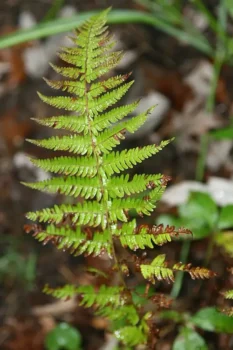
New York Fern: A Graceful Native Groundcover for Shady Spaces
If you’re looking for an elegant, low-maintenance groundcover that thrives in shade, the New York fern (Thelypteris noveboracensis) might just be your new best friend. This charming native fern brings a touch of woodland magic to gardens across much of North America, and once you get to know its unique personality, you’ll understand why so many gardeners are smitten.
What Makes New York Fern Special?
The New York fern stands out from its ferny cousins with its distinctive shuttlecock shape. Unlike many ferns that stay the same width from top to bottom, this beauty tapers at both ends – narrower at the base and tip, wider in the middle. It’s like nature decided to give this fern a little waist! The fronds typically reach about 1.5 feet tall and display a lovely yellow-green color that brightens up shady corners.
As a perennial fern, it comes back year after year, slowly spreading through underground rhizomes to form attractive colonies. Don’t worry though – it’s not aggressive. The spread rate is described as slow to moderate, so you won’t wake up to find it has taken over your entire yard overnight.
Where Does It Call Home?
This fern is a true North American native, naturally occurring across a impressive range that includes much of the eastern United States and southeastern Canada. You can find it growing wild from Maine down to Georgia and as far west as Minnesota and Arkansas. It’s also native to several Canadian provinces including New Brunswick, Nova Scotia, Ontario, Prince Edward Island, and Quebec.
- Species observed
- No observations
Why Plant New York Fern in Your Garden?
There are plenty of reasons to fall in love with this native beauty:
- Low maintenance: Once established, it requires minimal care and has low fertility requirements
- Shade tolerance: Thrives in areas where many other plants struggle
- Native wildlife support: Being native, it fits naturally into local ecosystems
- Erosion control: The spreading rhizomes help stabilize soil on slopes
- Seasonal interest: Provides fresh spring growth and golden fall color
- Versatile moisture tolerance: Can handle both wetland and drier conditions
Perfect Garden Situations
New York fern shines in several garden settings:
- Woodland gardens and naturalized areas
- Shaded borders and foundation plantings
- Rain gardens and areas with variable moisture
- Native plant gardens
- Groundcover for slopes and hard-to-mow areas
Its facultative wetland status means it’s adaptable – happy in moist conditions but also tolerant of drier spells once established.
Growing Conditions That Make It Happy
New York fern is refreshingly easy-going about its growing conditions:
- Light: Shade tolerant (actually prefers it!)
- Soil: Adaptable to coarse, medium, or fine-textured soils
- pH: Prefers slightly acidic conditions (4.0-7.0)
- Moisture: Low moisture use, but appreciates consistent moisture
- Hardiness: Cold hardy to USDA zones 3-8 (tolerates temperatures down to -28°F)
- Drainage: High tolerance for poorly drained soils
Planting and Care Tips
Getting started with New York fern is straightforward:
When to plant: Spring is ideal, when the fern is entering its active growth period. You can also plant in early fall.
How to plant: This fern is routinely available from native plant nurseries and can be propagated by division of rhizomes, spores, or purchased as container plants. Space plants about 18-24 inches apart if you want coverage relatively quickly.
Ongoing care: The beauty of this fern is that it mostly takes care of itself. Provide a layer of organic mulch to retain moisture and suppress weeds. The fern has a moderate growth rate and doesn’t require fertilization thanks to its low fertility requirements.
Winter care: The fronds don’t persist through winter, so you can clean up the dead foliage in late fall or leave it for winter wildlife habitat and remove it in early spring.
A Few Things to Keep in Mind
While New York fern is generally wonderful, there are a few considerations:
- It won’t provide nectar for pollinators since ferns don’t flower
- The spread rate is slow, so be patient if you’re looking for quick coverage
- It’s not suitable for high-traffic areas as the fronds are somewhat delicate
- In very dry conditions, the fronds may go dormant early
The Bottom Line
New York fern is an excellent choice for gardeners who want to incorporate beautiful native plants that support local ecosystems while requiring minimal fuss. Its graceful form, adaptability, and low-maintenance nature make it a valuable addition to shady gardens across its native range. Whether you’re creating a woodland garden, need groundcover for a challenging shady slope, or simply want to add some native charm to your landscape, this delightful fern deserves serious consideration.
Plus, there’s something deeply satisfying about growing a plant that’s been gracing North American woodlands for millennia – you’re not just adding to your garden, you’re connecting with the natural heritage of your region.