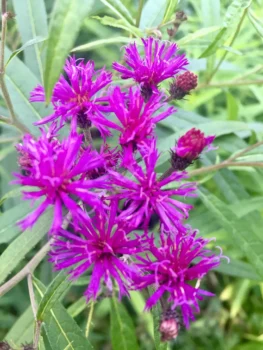
New York Ironweed: A Late-Season Pollinator Powerhouse for Your Native Garden
If you’re looking for a native plant that brings bold color to your garden when most other flowers are calling it quits for the season, let me introduce you to New York ironweed (Vernonia noveboracensis). This tall, stately perennial might just become your new favorite late-summer showstopper.
What Makes New York Ironweed Special?
New York ironweed is a native perennial forb that belongs to the sunflower family. Despite its somewhat intimidating name, this plant is actually quite the garden gem. The ironweed moniker comes from its tough, sturdy stems rather than any difficulty in growing it. In fact, it’s refreshingly easy to cultivate!
This native beauty can reach impressive heights of up to 6.6 feet tall, making it a perfect backdrop plant for your garden borders. Its dark green foliage provides a lovely contrast throughout the growing season, but the real magic happens in late summer when clusters of vibrant purple flowers burst into bloom.
Where Does It Call Home?
As a true native of the lower 48 states, New York ironweed has quite an extensive natural range. You’ll find it growing wild across much of the eastern United States, including Alabama, Connecticut, Delaware, District of Columbia, Florida, Georgia, Kentucky, Maryland, Massachusetts, New Hampshire, New Jersey, New Mexico, New York, North Carolina, Ohio, Pennsylvania, Rhode Island, South Carolina, Tennessee, Virginia, and West Virginia.
- Species observed
- No observations
Why Your Garden (and Local Wildlife) Will Love It
New York ironweed is like a late-season buffet for pollinators. When many other flowers have faded, this reliable bloomer provides crucial nectar for butterflies, bees, and other beneficial insects. Monarch butterflies are particularly fond of ironweed flowers, making it an excellent choice for butterfly gardens.
The timing couldn’t be better – these purple beauties bloom just when migrating monarchs need fuel for their incredible journey south. Plus, the seeds that follow provide food for birds later in the season.
Perfect Garden Roles
This versatile native works beautifully in several garden settings:
- Back-of-the-border plantings where its height won’t overshadow shorter plants
- Rain gardens and bioswales, thanks to its love of moist conditions
- Naturalized meadow areas and prairie restorations
- Pollinator gardens where late-season blooms are essential
- Native plant gardens focusing on regional flora
Growing Conditions: What New York Ironweed Craves
The beauty of native plants is that they’re already adapted to local conditions, and New York ironweed is no exception. Here’s what it prefers:
Moisture: This plant has a particular fondness for moist to wet conditions. Its wetland status varies by region, but it generally thrives in areas that stay consistently moist. Think of it as nature’s way of saying plant me near your downspout!
Soil: New York ironweed is quite accommodating when it comes to soil. It adapts well to both fine and medium-textured soils, and can even handle clay – a blessing for gardeners dealing with heavy soils that challenge many other plants.
Sun Requirements: While it can tolerate some shade, this plant really shines in full sun to partial shade conditions.
pH Tolerance: Quite flexible here too, handling pH levels from 4.5 to 8.0 – that covers most garden situations!
Hardiness and Climate
New York ironweed is a tough customer, hardy in USDA zones 4-9. It can handle temperatures as low as -33°F and needs at least 140 frost-free days to complete its growing cycle. The plant thrives in areas receiving 40-60 inches of annual precipitation.
Planting and Care Tips
Getting Started: You can grow New York ironweed from seed or purchase container plants. Seeds can be direct-sown in fall or spring, with about 300,000 seeds per pound – so a little goes a long way!
Planting: Space plants considering their mature size and spreading habit. They don’t spread aggressively but will self-seed in ideal conditions.
Maintenance: This is where New York ironweed really shines – it’s refreshingly low-maintenance. The plant has a moderate growth rate and doesn’t require frequent watering once established, though it appreciates consistent moisture.
Seasonal Care: Cut plants back in late winter or early spring. In windy locations, you might need to provide some support for the tall stems, though the sturdy iron stems usually hold up well on their own.
Propagation: The plant produces seeds from summer through fall, though seed abundance is relatively low. Seeds don’t persist long-term, so collect them promptly if you want to save them for future planting.
A Few Things to Keep in Mind
While New York ironweed is generally well-behaved, here are a few considerations:
- It can self-seed in ideal conditions, so deadhead spent flowers if you don’t want volunteers
- The tall stems may need staking in very windy, exposed locations
- Plants may look a bit rough by late fall, but resist cutting them back until late winter to provide wildlife habitat
The Bottom Line
New York ironweed is one of those wonderful native plants that gives you maximum impact with minimal fuss. Its late-season purple blooms provide crucial resources for wildlife when they need it most, while adding bold color and height to your garden design. Plus, there’s something deeply satisfying about growing a plant that’s been thriving in your region for thousands of years.
Whether you’re creating a rain garden, establishing a pollinator haven, or simply want to add some native character to your landscape, New York ironweed deserves a spot on your planting list. Your local monarchs will thank you!