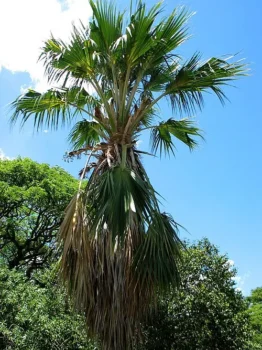
Nihoa Pritchardia: A Rare Hawaiian Palm You Should Admire from Afar
Meet the Nihoa pritchardia (Pritchardia napaliensis), one of Hawaii’s most elusive and endangered palm trees. While you might be tempted to add this exotic beauty to your tropical garden wishlist, this is one plant that’s better left in its natural habitat – and here’s why.
What Makes This Palm So Special?
The Nihoa pritchardia is a stunning fan palm that belongs to Hawaii’s native Pritchardia genus. Like its relatives, this perennial tree typically grows as a single-trunked specimen reaching 13 to 16 feet in height, topped with gorgeous fan-shaped leaves that catch the ocean breeze. It’s also known by the scientific synonym Pritchardia remota Becc. ssp. napaliensis, though you’re unlikely to find it in any nursery catalog.
A True Island Endemic
This remarkable palm is native exclusively to Hawaii, with an incredibly restricted range that makes it one of the world’s rarest palms. The Nihoa pritchardia calls only the remote Nihoa Island home – a tiny, rocky outcrop in the Northwestern Hawaiian Islands that’s part of the Papahānaumokuākea Marine National Monument.
- Species observed
- No observations
Why You Shouldn’t Plant This Palm
Here’s the important part: the Nihoa pritchardia is listed as Endangered in the United States. This isn’t just a rare plant – it’s a species hanging on by a thread in the wild. With such a precarious conservation status, this palm absolutely should not be cultivated by home gardeners, even if you could somehow get your hands on seeds or plants (which would likely be illegal anyway).
The few remaining individuals need to stay exactly where they are, protected in their native habitat where they can contribute to the species’ survival. Any removal from the wild could push this palm closer to extinction.
Growing Conditions in the Wild
In its natural Nihoa Island habitat, this palm has adapted to harsh coastal conditions with:
- Intense tropical sun and salt spray
- Rocky, well-draining soils
- Limited freshwater availability
- Strong ocean winds
- USDA hardiness zones 11-12 equivalent conditions
These specialized requirements make it unsuitable for most garden settings anyway, even if conservation weren’t a concern.
Better Alternatives for Your Garden
If you’re drawn to the beauty of Hawaiian fan palms, consider these more appropriate alternatives that won’t contribute to species extinction:
- Pritchardia filifera (California fan palm) – widely available and garden-friendly
- Pritchardia pacifica (Fiji fan palm) – another beautiful option for tropical gardens
- Other native Hawaiian plants that are sustainably propagated and appropriate for cultivation
Supporting Conservation Instead
Rather than trying to grow this endangered beauty, consider supporting organizations working to protect Hawaii’s native plants and their habitats. The best way to ensure future generations can appreciate the Nihoa pritchardia is to let it thrive in its natural island home while we work to protect and restore its population.
Sometimes the most responsible thing a plant lover can do is simply admire from a distance and support conservation efforts. The Nihoa pritchardia is definitely one of those times – a living treasure that belongs in the wild, not in our gardens.