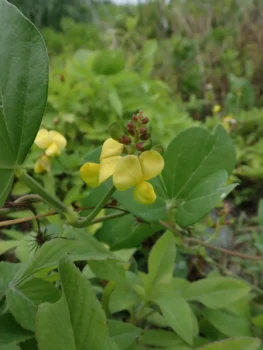
Notched Cowpea: A Tough Coastal Native That’s Perfect for Seaside Gardens
If you’re looking for a hardy, low-maintenance ground cover that can handle salty air and sandy soil, meet the notched cowpea (Vigna marina). Also known as beach pea, this resilient native vine is a hidden gem for coastal gardeners who want to create beautiful, sustainable landscapes that work with nature rather than against it.
What Makes Notched Cowpea Special?
Notched cowpea is a perennial flowering vine that belongs to the legume family. As a native species, it’s naturally adapted to thrive in Hawaii, Puerto Rico, Guam, Palau, and other Pacific islands. This tough little plant has earned its place in coastal ecosystems by developing an impressive tolerance for harsh seaside conditions that would make other plants wilt.
The plant produces charming small flowers in shades of purple or pink that look like tiny sweet pea blossoms. These blooms appear along trailing stems decorated with distinctive heart-shaped leaves, creating a delicate appearance that belies the plant’s rugged nature.
- Species observed
- No observations
Why Choose This Native Vine?
There are several compelling reasons to consider notched cowpea for your landscape:
- Salt tolerance: Perfect for oceanfront properties where salt spray kills most plants
- Erosion control: The spreading growth habit helps stabilize sandy soils
- Low water needs: Once established, it’s quite drought-tolerant
- Pollinator friendly: The flowers attract bees and butterflies
- Native plant benefits: Supports local ecosystems and requires minimal care
Where Does Notched Cowpea Fit in Your Garden?
This versatile ground cover works beautifully in several landscape situations:
- Coastal restoration projects: Helps rebuild natural dune systems
- Xeriscaping: Excellent choice for water-wise gardens
- Naturalized areas: Creates a wild, beachy look in informal landscapes
- Erosion-prone slopes: Particularly effective on sandy or loose soils
Growing Conditions and Care
The beauty of notched cowpea lies in its simplicity. This plant thrives in conditions that challenge most garden favorites:
Light: Full sun is best, though it can tolerate some light shade
Soil: Sandy, well-draining soil is ideal. It actually prefers poor soils and doesn’t need rich, amended earth
Water: Minimal watering once established. In fact, too much water can be problematic
Climate: Best suited for USDA hardiness zones 10-12, thriving in tropical and subtropical conditions
Planting and Establishment Tips
Getting notched cowpea established is refreshingly straightforward:
- Plant in spring when temperatures are consistently warm
- Space plants 2-3 feet apart to allow for spreading
- Water regularly for the first few weeks until roots establish
- Once established, reduce watering significantly
- No fertilizer needed – this plant actually fixes nitrogen from the air
Wetland Considerations
Interestingly, notched cowpea shows different wetland preferences depending on location. In Caribbean regions, it’s classified as an upland plant that rarely occurs in wet areas. However, in Hawaii, it’s more flexible and can grow in both wetland and upland conditions. This adaptability makes it even more valuable for diverse landscape situations.
A Perfect Choice for Sustainable Coastal Gardening
Notched cowpea represents everything we love about native plants: it’s beautiful, functional, and perfectly adapted to its environment. If you’re gardening in a coastal area within its native range, this charming vine offers an excellent way to create a landscape that’s both attractive and ecologically responsible.
Whether you’re dealing with challenging sandy soils, salt spray, or just want a low-maintenance ground cover that supports local wildlife, notched cowpea deserves a spot on your plant wish list. Sometimes the best garden solutions are the ones that have been thriving in your area long before gardens even existed.