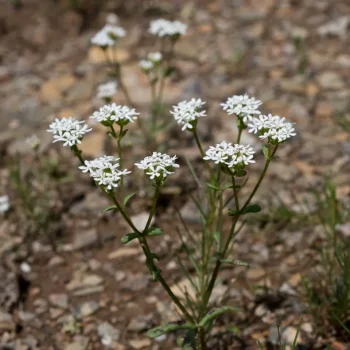
Nuttall’s Cornsalad: A Rare Native Spring Gem Worth Protecting
If you’re looking to add something truly special to your native plant garden, let me introduce you to Nuttall’s cornsalad (Valerianella nuttallii). This charming little annual might not be the showiest plant in your garden, but it’s got a story worth telling – and a conservation status that makes it particularly precious.
What Makes Nuttall’s Cornsalad Special?
Nuttall’s cornsalad is a delicate annual forb that belongs to a group of plants that have mastered the art of spring ephemeral living. These plants pop up early in the season, do their thing quickly, and then gracefully bow out before the heat of summer arrives. It’s like nature’s version of a pop-up shop – here for a good time, not a long time!
This native beauty produces clusters of tiny white to pale pink flowers that, while small, create a lovely carpet effect when planted in groups. The plant itself stays relatively compact, making it perfect for tucking into smaller spaces in your garden.
Where Does It Call Home?
Nuttall’s cornsalad has a pretty exclusive address – it’s native to just Arkansas and Oklahoma in the south-central United States. This limited range is part of what makes it so special, but it’s also why we need to be thoughtful about how we grow and share it.
- Species observed
- No observations
A Plant That Needs Our Help
Here’s where things get important: Nuttall’s cornsalad is considered rare. It has a global conservation status of S2?, which means its population status is uncertain but likely imperiled. In Arkansas, where it’s been better studied, it holds an S2 status – meaning it’s imperiled in the state due to rarity.
What does this mean for you as a gardener? If you’re lucky enough to find seeds or plants of Nuttall’s cornsalad, make sure you’re getting them from a reputable, responsible source. Never collect from wild populations, and always verify that any commercial source is ethically propagating their plants.
Why Grow Nuttall’s Cornsalad?
Despite its rarity (or perhaps because of it), there are several compelling reasons to include this plant in your garden:
- You’ll be participating in conservation by providing habitat and potentially increasing local populations
- It’s a true native that supports local ecosystem relationships
- The early spring blooms provide nectar for small pollinators and beneficial insects when few other flowers are available
- It adds authentic regional character to native plant gardens
- As an annual, it can fill in gaps and provide seasonal interest
Perfect Garden Companions
Nuttall’s cornsalad shines in native plant gardens, naturalized areas, and woodland edge plantings. Since it’s a spring ephemeral, it pairs beautifully with other early bloomers and plants that can take over the space as it fades away. Think of it as part of a seasonal relay team in your garden.
It’s particularly well-suited for gardens that celebrate regional flora and those focused on supporting native pollinators. The small flowers might seem insignificant, but they’re perfectly sized for tiny beneficial insects that larger flowers can’t accommodate.
Growing Conditions and Care
Based on its native habitat, Nuttall’s cornsalad likely prefers:
- Partial shade to full sun exposure
- Well-drained soils (avoid constantly wet conditions)
- USDA hardiness zones 6-8, based on its native range
- Spring planting for this annual species
As with many native annuals, once established, Nuttall’s cornsalad should require minimal care. It’s adapted to the natural cycles of its native region, so resist the urge to over-pamper it with excessive water or fertilizer.
Planting and Propagation Tips
Since specific growing information for this rare species is limited, your best bet is to mimic its natural habitat as closely as possible. Plant seeds in spring and allow the natural cycles to guide the plant’s development. If you’re successful in growing it, consider collecting and sharing seeds with other conservation-minded gardeners – but always check local regulations first.
The Bottom Line
Nuttall’s cornsalad isn’t for every garden or every gardener. Its rarity means it requires a commitment to responsible sourcing and thoughtful cultivation. But if you’re passionate about native plant conservation and have the opportunity to grow this special species ethically, it can be a meaningful addition to your garden – one that connects you directly to the unique flora of Arkansas and Oklahoma.
Remember, when it comes to rare plants like Nuttall’s cornsalad, we’re not just gardeners – we’re stewards. Every responsibly grown plant is a small victory for conservation, and every garden that hosts it becomes a tiny refuge for a species that needs our help to thrive.