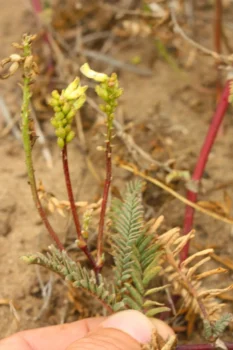
Nuttall’s Milkvetch: A Rare California Native Worth Protecting in Your Garden
Meet Nuttall’s milkvetch (Astragalus nuttallii var. virgatus), a charming perennial wildflower that’s as rare as it is beautiful. This California native might not be the showiest plant in your garden, but it’s got character, conservation value, and a quiet elegance that makes it a treasure for native plant enthusiasts.
What Makes This Plant Special
Nuttall’s milkvetch is a true California original, found exclusively in the Golden State. As a member of the pea family, it produces delicate purple to violet flowers that have that classic pea-like shape botanists get excited about. The blooms may be small, but they pack a punch when it comes to supporting local pollinators.
This perennial plant has earned its place in the native plant world not through flashy displays, but through its important ecological role and increasingly rare status in the wild.
Where You’ll Find It Growing Wild
Nuttall’s milkvetch calls California home, where it grows in coastal areas and specific microclimates. Its limited distribution makes every garden specimen potentially valuable for conservation efforts.
- Species observed
- No observations
A Word About Rarity
Here’s where things get serious: Nuttall’s milkvetch has a conservation status that suggests it’s becoming increasingly uncommon in the wild. This makes it extra important that if you choose to grow this plant, you source it responsibly from reputable native plant nurseries or conservation organizations – never collect it from wild populations.
Why Grow Nuttall’s Milkvetch?
Despite its rarity (or perhaps because of it), there are compelling reasons to consider this plant:
- Support local pollinators with flowers that attract native bees and butterflies
- Add authentic California native character to your landscape
- Contribute to conservation by maintaining genetic diversity in cultivation
- Enjoy low-maintenance gardening once the plant is established
- Create habitat that connects your garden to California’s natural heritage
Perfect Garden Spots
Nuttall’s milkvetch isn’t a plant for every garden situation, but it shines in the right setting:
- Native plant gardens focused on California flora
- Rock gardens with excellent drainage
- Drought-tolerant landscapes
- Wildlife gardens designed for native pollinators
- Conservation-minded landscapes
Growing Conditions That Make It Happy
Like many California natives, Nuttall’s milkvetch has adapted to the state’s Mediterranean climate and specific growing conditions:
- Sunlight: Full sun exposure
- Soil: Well-draining soil is absolutely essential
- Water: Drought tolerant once established; avoid overwatering
- Climate: Suited to USDA hardiness zones 8-10
Planting and Care Tips
Growing Nuttall’s milkvetch successfully requires understanding its native habitat preferences:
- Plant in fall for best establishment before hot weather
- Ensure excellent drainage – this plant hates soggy feet
- Water sparingly during establishment, then reduce watering significantly
- Avoid fertilizers, which can harm native plants adapted to lean soils
- Be patient – native plants often establish slowly but live long lives
Supporting Pollinators
The small but mighty flowers of Nuttall’s milkvetch provide nectar and pollen for native bees and butterflies. While the blooms might not create a dramatic display, they’re perfectly designed for the insects that co-evolved with this plant over thousands of years.
The Bottom Line
Nuttall’s milkvetch isn’t for every gardener or every garden. Its rarity means you’ll need to source it carefully, and its specific growing requirements mean it won’t thrive everywhere. But if you’re passionate about California native plants, committed to supporting local ecosystems, and have the right growing conditions, this little milkvetch could be a meaningful addition to your landscape.
Remember: only purchase from reputable sources, never collect from wild populations, and consider yourself a conservation partner in keeping this special plant thriving for future generations.