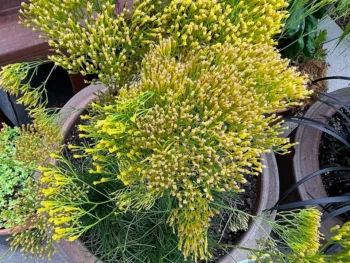
Nuttall’s Rayless Goldenrod: A Hidden Gem for Southern Gardens
If you’re looking for a native plant that delivers big impact with minimal fuss, meet Nuttall’s rayless goldenrod (Bigelowia nuttallii). This unassuming perennial might not win any beauty contests in spring, but come late summer, it transforms into a golden beacon that pollinators absolutely adore.
What Makes This Plant Special?
Don’t let the name fool you – while it’s called rayless goldenrod, this charming native still produces clusters of small, bright yellow flowers that create a stunning display from late summer through fall. The compact, shrubby growth habit makes it perfect for gardeners who want native beauty without the maintenance headaches.
Where Does It Call Home?
Nuttall’s rayless goldenrod is a true Southern belle, native to six states across the southeastern United States: Alabama, Florida, Georgia, Louisiana, North Carolina, and Texas. You’ll typically find it thriving in sandy coastal plains and well-drained upland areas.
- Species observed
- No observations
Why Your Garden (and Local Wildlife) Will Love It
This native perennial hits the sweet spot for gardeners who want maximum benefit with minimum effort. Here’s what makes it a winner:
- Provides crucial late-season nectar when many other flowers have finished blooming
- Attracts butterflies, native bees, and other beneficial pollinators
- Thrives in poor, sandy soils where other plants struggle
- Extremely drought tolerant once established
- Low maintenance with a naturally compact form
Perfect Garden Situations
Nuttall’s rayless goldenrod shines in several garden scenarios:
- Native plant and pollinator gardens
- Xeriscapes and drought-tolerant landscapes
- Coastal gardens that deal with sandy soil and salt exposure
- Naturalized meadow areas
- Low-maintenance foundation plantings
Growing Conditions and Care
This adaptable native is surprisingly easy to please, thriving in USDA hardiness zones 8-10. Here’s what it needs to flourish:
- Sunlight: Full sun for best flowering
- Soil: Well-drained, sandy or rocky soils (it actually prefers poor soil!)
- Water: Drought tolerant once established; avoid overwatering
- Maintenance: Minimal pruning needed, though light trimming can maintain shape
Planting Tips for Success
Getting started with Nuttall’s rayless goldenrod is straightforward:
- Plant in spring after the last frost
- Space plants according to their mature size
- Water regularly the first year to help establish roots
- Once established, this plant practically takes care of itself
An Important Conservation Note
Here’s something every responsible gardener should know: Nuttall’s rayless goldenrod has a conservation status that indicates some concern about its populations in the wild. If you decide to add this beauty to your garden, make sure you’re purchasing from reputable nurseries that propagate their plants rather than collecting from wild populations. By choosing responsibly sourced plants, you’re supporting both conservation efforts and sustainable nursery practices.
The Bottom Line
Nuttall’s rayless goldenrod might not be the showiest plant in the garden center, but it’s exactly the kind of reliable, beneficial native that smart gardeners are discovering. It offers late-season color when your garden needs it most, supports local wildlife, and asks for very little in return. For Southern gardeners looking to create sustainable, wildlife-friendly landscapes, this golden gem deserves serious consideration.
Plus, there’s something deeply satisfying about growing a plant that’s perfectly adapted to your region’s conditions – it’s like welcoming home a long-lost friend who knows exactly how to thrive in your neighborhood.