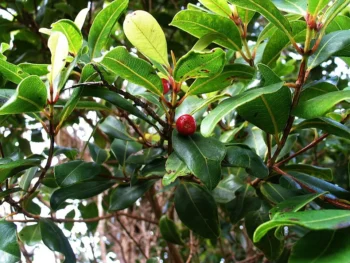
‘Ohi’a Ha: A Vulnerable Hawaiian Native Worth Protecting in Your Garden
Meet ‘ohi’a ha (Syzygium sandwicense), a charming Hawaiian native shrub that deserves a spot in your tropical garden—but with an important caveat. This beautiful member of the myrtle family is more than just another pretty plant; it’s a vulnerable species that needs our help to survive.
What Makes ‘Ohi’a Ha Special?
‘Ohi’a ha is endemic to the Hawaiian Islands, meaning it exists nowhere else on Earth. This perennial shrub typically grows as a multi-stemmed woody plant, usually staying under 13-16 feet tall, though it can occasionally grow taller or develop a single trunk depending on growing conditions.
The plant produces clusters of small, fragrant white to cream-colored flowers that eventually give way to reddish-purple berries. Its glossy green leaves create an attractive backdrop year-round, making it a lovely addition to any native Hawaiian landscape.
Where Does It Grow?
You’ll find ‘ohi’a ha growing naturally throughout the Hawaiian Islands. It’s adapted to Hawaii’s unique climate and growing conditions, thriving in the state’s tropical and subtropical environments.
- Species observed
- No observations
A Plant That Needs Our Help
Here’s where things get serious: ‘ohi’a ha has a global conservation status of S3, meaning it’s considered vulnerable. With typically only 21-100 occurrences or between 3,000-10,000 individuals remaining, this species is at risk of disappearing forever.
If you’re considering adding ‘ohi’a ha to your garden, please only source plants from reputable native plant nurseries that propagate from existing cultivated stock—never collect from the wild.
Growing ‘Ohi’a Ha Successfully
The good news is that ‘ohi’a ha can be successfully grown in home gardens, and doing so actually helps preserve this vulnerable species. Here’s what you need to know:
Ideal Growing Conditions
- Climate: USDA hardiness zones 10-11 (tropical to subtropical)
- Sunlight: Partial shade to full sun
- Soil: Well-draining soils are essential
- Water: Moderate moisture needs; it’s classified as facultative upland, meaning it usually grows in non-wetland areas but can tolerate some wetness
Planting and Care Tips
- Plant in well-draining soil to prevent root rot
- Provide regular watering during establishment, then reduce frequency once established
- Mulch around the base to retain moisture and suppress weeds
- Minimal pruning required—just remove dead or damaged branches
- Be patient with growth; like many native plants, it may establish slowly but will be worth the wait
Garden Design and Landscape Role
‘Ohi’a ha works beautifully as:
- A specimen plant in native Hawaiian gardens
- Part of restoration plantings
- An understory shrub in naturalized landscapes
- A habitat plant supporting native Hawaiian wildlife
Supporting Hawaiian Ecosystems
Beyond its beauty, ‘ohi’a ha plays an important ecological role. Its flowers provide nectar for native Hawaiian pollinators, including native insects and birds. The berries also serve as food for wildlife, making your garden a mini-ecosystem that supports Hawaii’s unique biodiversity.
The Bottom Line
Growing ‘ohi’a ha is both a privilege and a responsibility. This vulnerable native deserves our protection and care, and by growing it in our gardens with responsibly sourced plants, we become conservation partners. Just remember: always buy from reputable sources, never collect from the wild, and enjoy watching this special Hawaiian native thrive in your landscape.
Your garden can become a sanctuary for this beautiful shrub while contributing to the preservation of Hawaii’s unique natural heritage. Now that’s gardening with purpose!