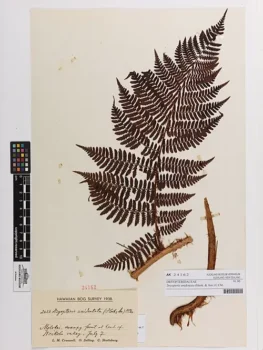
Onetooth Woodfern: A Rare Hawaiian Native Worth Protecting
If you’re lucky enough to garden in Hawaii’s tropical paradise, you might want to get acquainted with one of the islands’ special native treasures: the onetooth woodfern (Dryopteris unidentata). This elegant fern is more than just another pretty frond – it’s a piece of Hawaii’s natural heritage that deserves our attention and care.
What Makes This Fern Special?
The onetooth woodfern is a perennial fern that’s found exclusively in Hawaii, making it what botanists call endemic to the islands. Unlike many ferns you might be familiar with, this beauty has distinctively serrated frond edges that give it its onetooth common name. As a true fern, it reproduces through spores rather than flowers or seeds, adding an ancient, prehistoric feel to any garden setting.
Where You’ll Find It Growing Wild
This remarkable fern calls only the Hawaiian Islands home, where it grows naturally in the understory of native forests. You won’t find wild populations anywhere else on Earth, which makes it all the more precious for local gardeners and conservation efforts.
- Species observed
- No observations
A Plant That Needs Our Help
Here’s something important every Hawaii gardener should know: the onetooth woodfern has a vulnerable conservation status. With only an estimated 3,000 to 10,000 individuals remaining in the wild, this fern is considered at risk. If you’re thinking about adding it to your garden, that’s actually wonderful – but please make sure you source it responsibly from reputable native plant nurseries rather than collecting from wild populations.
Perfect Spots for Your Garden
The onetooth woodfern shines in several garden settings:
- Shade gardens where it can mimic its natural forest understory habitat
- Native Hawaiian plant collections
- Naturalistic woodland-style plantings
- Areas with consistent moisture but good drainage
Since it’s classified as facultative upland, this fern typically prefers non-wetland conditions but can tolerate some moisture variation, making it fairly adaptable within its preferred growing conditions.
Growing Conditions That Make It Happy
Think of this fern as wanting the Hawaiian forest floor experience in your garden:
- Light: Partial to full shade – direct sunlight is not its friend
- Soil: Moist, well-draining soil that doesn’t get soggy
- Climate: Thrives in USDA zones 10-12 (Hawaii’s tropical conditions)
- Humidity: Appreciates the natural humidity of Hawaiian environments
Planting and Care Made Simple
Once you’ve sourced your onetooth woodfern responsibly, caring for it is refreshingly straightforward:
- Plant in a shaded spot with rich, organic soil
- Keep soil consistently moist but never waterlogged
- Mulch around the base to help retain moisture and suppress weeds
- Remove any dead or damaged fronds as needed
- Be patient – ferns generally grow slowly but steadily
Why Choose This Native Beauty?
While the onetooth woodfern might not attract butterflies or hummingbirds like flowering plants do, it offers something equally valuable: a connection to Hawaii’s unique natural heritage. By growing this vulnerable native species in your garden, you’re participating in conservation efforts while enjoying the timeless elegance that only ferns can provide.
Plus, there’s something deeply satisfying about nurturing a plant that has called these islands home for countless generations. In a world where so many garden plants come from far away places, choosing a true Hawaiian native feels like gardening with purpose.
Just remember: if you decide to welcome this rare beauty into your garden, always source it from reputable native plant nurseries. Every responsibly grown onetooth woodfern in a home garden is one small step toward ensuring this special species continues to grace Hawaii’s landscape for generations to come.